Technology in space shapes missions, science, and commerce in 2026. The article explains key systems, uses, and trade-offs. It presents facts and examples that guide planners, engineers, and curious readers. It keeps language clear and direct. It focuses on advances that change how spacecraft travel, how humans live, and how data flows from orbit to Earth.
Key Takeaways
- Advances in propulsion and reusable launch systems make technology in space more cost-effective and accessible for diverse missions.
- Satellites with modular payloads and closed-loop habitation systems prepare for longer human space presence and enhanced commercial services.
- Robotics and in-situ resource utilization (ISRU) reduce mission risks and reliance on Earth supplies by performing maintenance and using local materials.
- Commercial space technology thrives on data services like imaging and low-latency broadband, supported by edge computing in orbit.
- Policy and regulation guide frequency use, debris management, cybersecurity, and resource rights to ensure safe and sustainable space operations.
- Collaboration among firms, regulators, and researchers is crucial to maintain reliable, secure, and environmentally responsible technology in space.
Advanced Propulsion, Launch Systems, And In-Orbit Transportation
Propulsion drives progress in technology in space. New chemical engines deliver higher performance for short missions. Electric thrusters push payloads efficiently for long missions. Nuclear thermal concepts promise faster transit for crewed flights, though they face regulatory and safety tests. Reusable launch vehicles lower cost per kilogram. Reusability lets operators fly more often and refine vehicle designs. Small launchers provide rapid, lower-cost access for cubesats and probes. They let researchers test instruments and scale experiments.
Beyond individual engine advances, system-level trade-offs determine mission architectures. Mission planners weigh impulse, specific impulse, thrust-to-weight, and propellant logistics when choosing propulsion for delivery, stationkeeping, or deep-space transfers. Thermal control, power generation, and propellant management interlock with propulsion choices; for example, high-power electric propulsion requires robust solar arrays or nuclear power systems. Design cycles now emphasize iterative testing with subscale hardware in relevant environments to close performance gaps before committing flight hardware.
In-orbit transportation moves cargo and crew between points. Tugs using electric propulsion transfer satellites to precise orbits. Refueling services extend satellite life and reduce replacement costs. Autonomous docking systems let vehicles connect without human control. They use lidar, cameras, and software to match positions and velocities. Spacecraft designers apply redundancy to improve safety. Engineers include multiple sensors and cross-checks to prevent single failures.
Operational concepts for in-orbit logistics are evolving to include standardized interfaces for fuel transfer, grapple points for robotic servicing, and software protocols for traffic coordination. Logistics providers plan mixed fleets—robotic tugs, crew vehicles, and cargo carriers—that can be repurposed across missions. Testing of rendezvous and proximity operations in simulation and on-orbit demonstrations has increased confidence in these capabilities, while insurance and liability frameworks adapt to cover new service modes.
Launch infrastructure expanded to support frequent flights. New ground stations and mobile launch platforms reduce schedule conflicts. Manufacturers standardize interfaces to speed integration. Standardization lowers vendor lock-in and cuts assembly time. Investors fund rapid iteration and short development cycles. This funding accelerates testing and moves promising concepts into operations. In sum, propulsion advances and launch system improvements change how missions start, move, and scale. These changes make technology in space more accessible and more practical for a wider range of users.
Supply chain resilience and manufacturing innovation also underpin these advances. Additive manufacturing, standardized avionics stacks, and software-defined subsystems shorten lead times and allow rapid field fixes. Workforce development—training technicians and systems engineers skilled in both software and hardware integration—remains critical to translate propulsion and launch advances into reliable operational capability.
Satellites, Habitation Systems, Robotics, And In‑Situ Resource Utilization
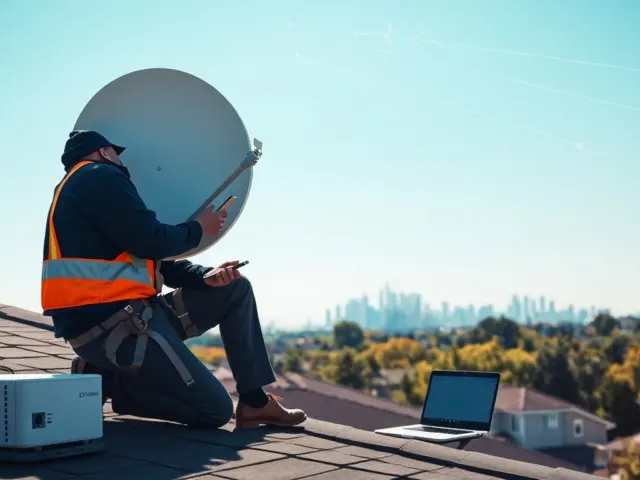
Satellites drive most commercial uses of technology in space. High-resolution imaging, communications, and navigation services reach global customers. Constellations of small satellites provide low-latency broadband and climate monitoring. Manufacturers place modular payload bays on satellites to allow upgrades on orbit. This approach extends usefulness and lowers lifecycle cost.
Satellite architectures now focus on software-defined payloads, flexible mission planning, and on-orbit reconfiguration. Modular buses and common electrical and mechanical interfaces let operators swap or add instruments with servicing missions or robotic modules. Survivability features—radiation-tolerant processors, fault-tolerant software, and distributed sensing—improve mission robustness. Ground-segment integration, including cloud-native processing pipelines and open data formats, helps downstream users ingest and apply space-derived data quickly.
Habitation systems prepare for longer human presence. Designers use closed-loop life support to recycle air and water. Inflatable modules increase habitable volume with low launch mass. Radiation shielding combines physical barriers and active monitoring to protect occupants. Engineers run long-duration tests on Earth to validate systems before flight. Medical systems use telemedicine links to provide care and diagnostics in transit.
Beyond core life support, crewed facilities emphasize human factors, habitability, and logistics. Crew training, psychological support, and contingency medical capabilities are designed together with habitat hardware. Redundancy in power, environmental control, and communications is planned so that habitation systems can tolerate single-point failures. Long-duration missions also drive research into food production, exercise systems, and compact medical diagnostics that reduce resupply needs.
Robotics handle many in-space tasks. Robotic arms assemble structures, capture debris, and perform maintenance. Ground teams control robots for routine work and override autonomy when needed. Robots reduce risk to humans and lower mission cost. Developers equip robots with dexterous end effectors and force control to handle diverse tasks. Software updates arrive via uplink to improve performance after deployment.
Robotic autonomy is advancing through improved perception, machine learning for manipulation, and hybrid human-automation workflows. For large-scale construction—orbital platforms or surface habitats—robotics must coordinate in swarms, manage power cycles, and self-diagnose faults. Standards for interfaces and behaviors between robotic systems are emerging to enable multi-vendor cooperation during assembly and servicing operations.
In-situ resource utilization changes mission logistics. Extractors and processors convert local materials into fuel, water, and construction feedstock. ISRU reduces the need to launch all supplies from Earth. Mining regolith or capturing ice near shadowed craters supplies propellant for further travel. Pilot demonstrations in 2026 proved basic processing steps on small robotic platforms. These demonstrations show that technology in space can use local resources to support exploration and commerce.
Scaling ISRU from demonstrations to operational supply chains requires integrated systems engineering: prospecting sensors, processing plants sized to mission demand, and product handling for manufactured propellant or building materials. Planners examine resource location certainty, energy availability, and thermal control for processing equipment. Legal and economic frameworks that govern off-world resource extraction remain active areas of work, influencing commercial investment and public-private partnerships in ISRU development.
Commercial Applications, Data Services, And Policy Challenges For Space Technology
Commercial firms monetize technology in space through data and services. Companies sell imagery, analytics, and communication links to governments and businesses. Operators package telemetry and processed products for agriculture, shipping, and emergency response. Edge computing in orbit reduces latency and lowers downlink costs. Service providers deploy cloud-like platforms to host workloads near the data source.
Business models diversify as customers demand tailored services: subscription access to imagery and analytics, tasking-as-a-service for targeted observations, and hosted payload platforms that let third parties deploy experiments with lower upfront costs. Market entrants explore hybrid models that combine government contracts with commercial service lines to balance revenue and long-term sustainability.
Policy and regulation shape how technology in space develops. Nations set frequency rules, licensing processes, and debris mitigation standards. International coordination addresses spectrum sharing and traffic management. Regulators require collision-avoidance plans and deorbit strategies for new satellites. Export controls affect hardware and software transfer across borders. Firms plan compliance into design and operations to avoid fines and delays.
Regulatory frameworks are adapting to novel capabilities such as on-orbit servicing, active debris removal, and off-world resource extraction. Policymakers work with industry to define norms for acceptable behavior, transparency in conjunction data, and standards for remote identification and traffic management. These discussions influence certification timelines and can affect investor appetite for new ventures.
Security and resilience matter for critical services. Operators build redundancy and encrypt links to protect data and command channels. They design systems to operate in degraded conditions and to recover after faults. Cybersecurity teams run continuous tests and threat modeling to find weaknesses before launch.
Operational resilience also includes supply-chain security for critical components, resilient ground segments, and plans for rapid replacement or mitigation in the event of hardware loss or disruption. Cross-sector exercises that simulate outages and coordinated responses help refine contingency plans and build trust among commercial and government actors.
Environmental and safety concerns drive stewardship practices. Operators track debris and plan responsible end-of-life disposal. Agencies fund technologies that remove debris or prevent its creation. Policy makers debate ownership rules and resource use rights for off-world materials. These debates influence investment and partnership decisions.
Finally, workforce development, international partnerships, and standards bodies play enabling roles. Universities, industry consortia, and government programs train the engineers, operators, and policymakers needed to design, regulate, and operate complex space systems. Open standards and shared test facilities reduce duplication and help new entrants adopt best practices, improving the overall ecosystem for technology in space. Overall, commercial demand, technical capability, and policy choices interact to determine how technology in space reaches users and serves public needs. Firms, regulators, and researchers each play roles in making systems reliable, safe, and useful.