Researchers list benefits of space exploration that affect life on Earth and the global economy. The list shows direct gains in science, technology, and public safety. The list shows indirect gains in jobs, education, and international cooperation. The reader will find clear examples and practical outcomes. The article will state benefits of space exploration in plain terms and with concrete examples. Below, each major area of benefit is explained in more depth, with attention to how discoveries and investments in space translate into measurable outcomes on Earth and how those outcomes feed back into further research and policy.
Key Takeaways
- The benefits of space exploration include accelerating scientific discovery about the universe, leading to clearer theories on planetary formation and organic chemistry beyond Earth.
- Space exploration drives technological innovation, creating spin-offs such as faster computing and improved materials that boost economic growth and job creation.
- Everyday products and medical advances, like memory foam and improved osteoporosis treatments, result from space research, improving health outcomes and lowering costs.
- Public and private partnerships in the space economy foster competition and innovation, lowering launch prices and enabling new business models in manufacturing and tourism.
- Satellites support Earth monitoring by providing critical data for climate tracking, disaster warning, and environmental management, informing better policy decisions.
- Space missions inspire education and global cooperation, increasing STEM enrollment and fostering international partnerships that enhance scientific capacity worldwide.
Accelerating Scientific Discovery About The Universe And Life
Scientists use telescopes and probes to test hypotheses about stars, planets, and life. They collect samples, record signals, and share data. The benefits of space exploration include new knowledge about planetary formation and about possible life beyond Earth. Teams test instruments in space that they cannot test on Earth. They refine models of physics and chemistry from those tests. They publish results that other researchers use for follow-up studies. The work leads to clearer theories about the origin of the solar system and about organic chemistry on other worlds.
Beyond singular discoveries, missions create long-term datasets that let researchers distinguish short-term variability from sustained trends. For example, repeated observations of planetary atmospheres and comet compositions feed comparative planetology—studying similarities and differences across bodies to understand processes like volatile transport, magnetosphere interactions, and surface weathering. These datasets also support interdisciplinary work combining geology, chemistry, and biology to assess habitability potential.
Laboratory techniques and analytical methods developed for missions—such as sample handling under pristine conditions and instrument miniaturization—are re-used in terrestrial laboratories. The iterative cycle of hypothesis, mission design, data return, and model revision speeds scientific progress in areas ranging from high-energy astrophysics to astrobiology. Open data policies and international collaborations amplify these gains by making observations available to broader researcher communities.
Driving Technological Innovation, Spin‑Offs, And Economic Growth
Engineers design systems to survive harsh space conditions. Companies then adapt those systems for Earth markets. The benefits of space exploration include faster computing, improved materials, and new manufacturing methods. Those innovations support startups and large firms. They create jobs and attract investment. They lower costs for other industries by offering better sensors, batteries, and software. Governments and firms measure return on investment from these advances in patents, exports, and new services.
Several technology pathways illustrate how space needs translate to broader economic activity. Advanced materials developed to shield spacecraft from extreme temperature swings find uses in construction and transportation. Precision guidance and control systems originally built for satellites enable automation and robotics in manufacturing. Improvements in propulsion and lightweight structures can cascade into logistics and aviation. These technology transfers create supplier networks, service companies, and specialized training programs, deepening local and regional economic ecosystems.
Space programs also stimulate demand for highly skilled labor in engineering, software, and manufacturing. That demand drives educational offerings and vocational training, which in turn increases the qualified workforce available to other high-tech sectors. Investment in space infrastructure—launch facilities, testing labs, ground stations—further supports regional development through construction jobs, long-term operations roles, and ancillary businesses such as hospitality and transport.
Everyday Products And Medical Advances From Space Research
Researchers convert space-tested technology into consumer products. The benefits of space exploration include memory foam, advanced imaging, and surgical tools. Medical teams use microgravity research to study bone loss and cell behavior. Companies adopt those findings to improve osteoporosis treatments and drug delivery. The work also improves sterilization, remote monitoring, and telemedicine. These changes lower health costs and improve patient outcomes in multiple countries.
Microgravity research yields unique experimental conditions that reveal biological responses not observable on Earth. Cell growth, tissue engineering, and protein crystallization experiments in space help refine drug formulations and diagnostic techniques. Telemedicine systems developed to support astronauts on long-duration missions are repurposed to deliver care in remote and underserved communities. Likewise, life-support and filtration technologies originally designed for spacecraft inform portable medical devices and emergency response kits.
Beyond direct medical applications, consumer products traceable to space research improve daily life—materials that enhance energy efficiency in buildings, sensors that create smart-home systems, and ergonomic designs informed by human factors research in confined environments. These spin-offs illustrate how investments aimed at mission success generate a broad portfolio of commercial and societal benefits.
Space Economy Models — Government, Private, And International Partnerships
Nations fund missions that push basic science and infrastructure. Private firms invest in launchers, satellites, and habitats. The benefits of space exploration appear when partners share costs and risks. They form contracts, joint ventures, and public-private partnerships. They set clear regulations and market rules. The mix of funding sources increases competition and lowers launch prices. The result supports new business models for manufacturing, tourism, and data services.
Different funding and governance models produce different outcomes. Government-led programs typically prioritize long-term science, infrastructure, and national security objectives, while private players often focus on rapid iteration, cost reduction, and marketable services. When coordinated, these approaches enable ambitious flagship missions alongside a flourishing commercial sector that provides routine services—such as communications, Earth observation, and in-orbit servicing—freeing public agencies to pursue higher-risk science.
International partnerships further extend benefits by pooling expertise and sharing access to facilities, instruments, and datasets. Cooperative frameworks reduce duplication of effort, distribute mission costs, and increase diplomatic ties. They also create pathways for capacity building: participating countries gain technical experience, train personnel, and build institutions that support domestic research and industry growth.
Monitoring And Protecting Earth: Climate, Resources, And Disaster Warning
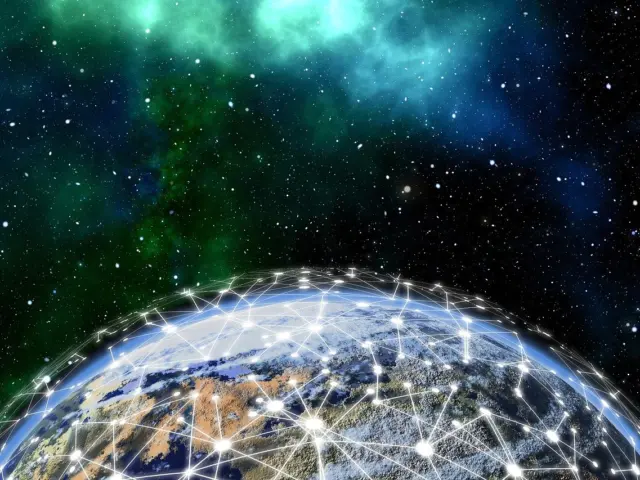
Satellites measure temperature, sea level, and ice extent daily. They send precise data to agencies and researchers. The benefits of space exploration include better tracking of climate trends and resource changes. Agencies use satellite data to plan responses to floods, fires, and storms. They run models that improve early warning systems. The data guide policy decisions that affect water management, urban planning, and conservation. Leaders rely on those measurements to set targets and to report progress.
Earth observation platforms collect consistent, repeatable measurements over large areas, enabling long-term environmental monitoring at scales impossible from the ground alone. These observations feed climate models used by scientists and policymakers to evaluate mitigation and adaptation options. They also provide the empirical basis for land-use planning, fisheries management, and protected-area enforcement, helping balance development with conservation.
Data from satellites improve operational decision-making in emergencies: imaging and radar deliver near-real-time views of flooded regions, burned areas, or shifting coastlines, supporting rescue and recovery operations and helping insurance and aid organizations prioritize resources. In urban settings, satellite-derived maps inform infrastructure resilience planning by identifying flood-prone neighborhoods, heat islands, and vulnerable transportation links.
Satellite Data For Agriculture, Weather, And Climate Policy
Farmers receive satellite images to optimize planting and irrigation. Utilities use weather forecasts that satellites improve. The benefits of space exploration include higher crop yields and lower waste. Governments use remote sensing to verify emissions and to target subsidies. Insurance firms use satellite records to speed claims after disasters. These applications save money and reduce risk across supply chains. They help communities adapt to changing weather and to build resilient infrastructure.
Precision agriculture powered by satellite imagery helps farmers apply water, fertilizers, and pesticides more efficiently, reducing costs and environmental impacts while sustaining yields. Weather and climate services based on satellite inputs inform energy providers, transportation networks, and emergency planners, reducing downtime and economic losses from extreme events. Policy-makers use long-term datasets to measure progress on environmental commitments and to design incentives that encourage sustainable practices.
Private companies and public agencies increasingly collaborate to turn raw satellite data into actionable products—maps, alerts, and analytics—that serve end users from smallholder farmers to multinational supply chains. These services expand market opportunities for data providers and create jobs in data processing, interpretation, and application development.
Inspiring Education, Equity, And Global Cooperation Through Exploration
Space missions capture public attention and spur career interest in science. Teachers use mission data and images to teach physics, math, and coding. The benefits of space exploration include greater STEM enrollment and a more diverse talent pool. Nations run joint missions that build trust and share skills. They form exchange programs and collaborative research projects. These efforts raise scientific capacity in lower-income countries. They help equals work together on shared challenges like climate and disease monitoring.
Outreach and education programs tied to missions create accessible entry points for students and lifelong learners. Curriculum materials based on real mission data let students practice data analysis and critical thinking with inspiring content. Scholarships, internships, and mentorship programs associated with space projects help diversify the pipeline into STEM careers, reaching underrepresented groups and regions with historically limited access to advanced training.
At the diplomatic level, space cooperation serves as a platform for sustained collaboration even when political relations are strained in other areas. Joint missions and shared data products build technical ties and institutional links that can be leveraged to address transnational problems. By aligning scientific goals and sharing the costs and rewards of exploration, participating nations strengthen mutual trust and create practical channels for knowledge transfer and capacity building.