How do astronauts sleep in space is a common question. This article explains sleep aboard spacecraft, why it is harder than on Earth, the gear and systems crews use, and practical tips you can try at home or when traveling. It describes how crews sleep in different vehicles, how microgravity and the space environment change sleep patterns and circadian timing, and which countermeasures help protect performance and health. The tone stays clear and direct, using plain language so readers can grasp the main points quickly while offering enough detail to be useful.
Key Takeaways
- Astronauts face unique sleep challenges in microgravity, such as disrupted body signals and constant spacecraft noise that can fragment sleep.
- Space agencies equip astronauts with private crew quarters or sleeping pods that provide a flat surface, noise and light isolation, and ventilation to improve sleep quality.
- Microgravity affects sleep architecture by shortening REM sleep and causing more frequent awakenings, which can impact cognitive function and mood.
- Light timing is crucial in space, as the 90-minute orbit cycle disrupts circadian rhythms, leading to potential phase shifts in astronauts’ biological clocks.
- Practical astronaut-inspired tips for better sleep include creating a dark, quiet environment, maintaining consistent schedules, avoiding caffeine before bedtime, and managing light exposure.
- Using eye masks, earplugs, and limiting heavy meals before sleep mirrors space crew practices to enhance rest even on Earth or during travel.
Why Sleep Is More Difficult Aboard Spacecraft
Microgravity removes many of the familiar physical cues that tell the body to prepare for sleep. On Earth, lying down, pressure on the body, and the pull of gravity all contribute to the brain’s sense of orientation and rest state; in microgravity those cues are absent, so vestibular and proprioceptive signals are altered and the brain can misinterpret them. Astronauts often report that they feel as though they are constantly floating rather than settling into a bed, which can delay sleep onset and make the first phase of sleep lighter.
Beyond physiology, the space environment presents several external challenges. Spacecraft contain continuous background noise from life-support fans, pumps, and equipment; that noise is steady and can fragment sleep even at moderate levels. Air circulation systems are necessary to prevent pockets of CO2 buildup near a crewmember’s face, because elevated CO2 can cause awakenings and a sensation of breathlessness. Temperature control is also more difficult in a small, electronics-filled module, so thermal comfort can vary and disturb sleep.
Lighting and schedule demands compound the problem. Low Earth orbit vehicles see roughly 16 sunrises and sunsets per 24 hours, with an orbital period of about 90 minutes, which produces rapid light-dark transitions that can confuse the circadian system. Mission tasks, experiments, and occasional night-shift work further fragment sleep opportunity and introduce variability into sleep timing. Stress, excitement, and operational demands—especially during launch, docking, spacewalks, or returns—can shorten sleep and reduce sleep quality, which in turn impairs alertness, reaction time, decision-making, and mood if not managed proactively.
Sleeping Systems: From Sleeping Bags To Private Crew Quarters
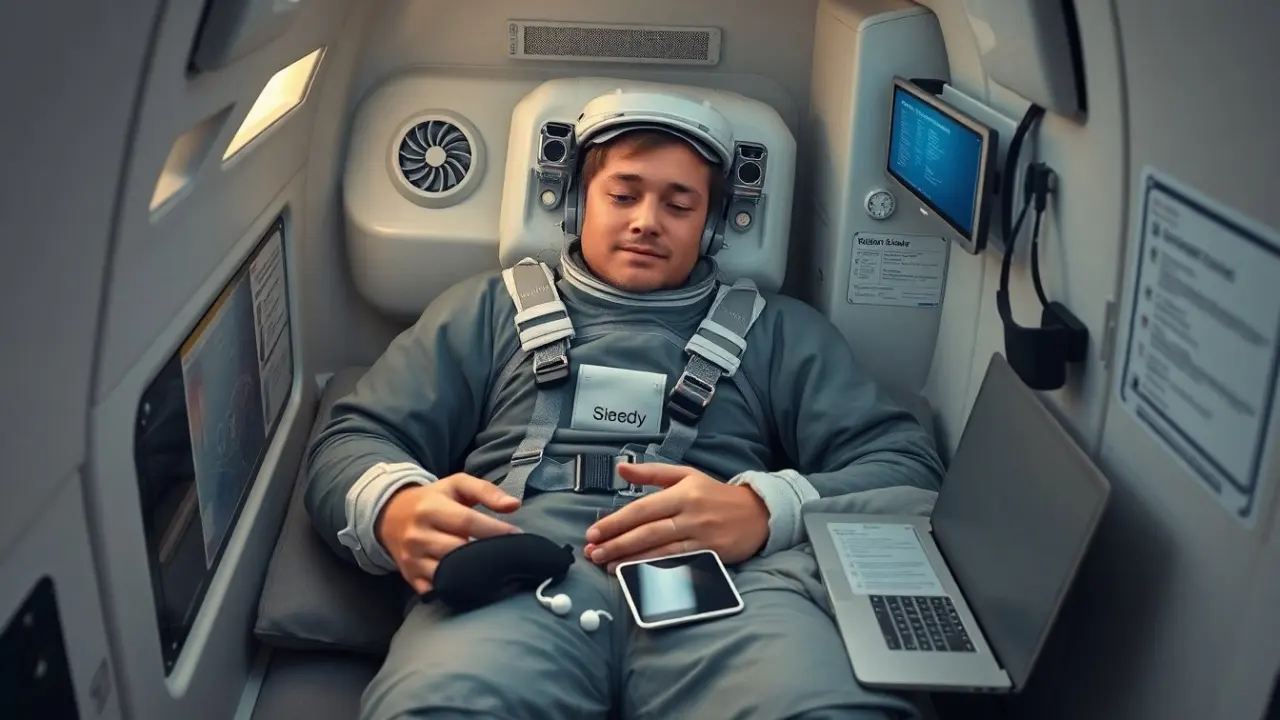
How do astronauts sleep in different spacecraft? Historically, early missions used sleeping bags tethered to a cabin wall so crewmembers would not drift into equipment; straps and restraints kept the sleeper in place. Those simple systems continue to be useful on short flights. On long-duration platforms such as the International Space Station (ISS), crews use private crew quarters—small, insulated compartments roughly the size of a closet. Each compartment provides a flat surface (a mattress or padded panel) and a set of restraints or straps to secure the astronaut in one position, preventing drifting and allowing a consistent sleeping posture.
Private crew quarters are designed with several features intended to improve sleep. They block light from the communal module, offer some acoustic dampening, provide personal storage for sleep items, and include ventilation that directs fresh air across the face to prevent CO2 from pooling. Astronauts can attach personal comfort items inside the quarter—clothes, photos, pillows, or a music player—to create a psychological sense of place and privacy, which matters for relaxation. In transport vehicles and newer commercial spacecraft, rigid or soft sleeping pods and modular bunks serve the same functions: isolation from ambient noise and light, airflow control, and a secured surface to maintain orientation.
In addition to physical sleep spaces, agencies provide behavioral and technological aids. Light-emitting devices and scheduled lighting changes support circadian synchronization; sleep-monitoring devices and self-reported sleep logs let flight surgeons and sleep specialists track sleep duration and architecture; and crews may use short-term pharmacological aids or melatonin under medical supervision when operational needs require. Exercise equipment is scheduled into daily routines because regular physical activity helps consolidate nighttime sleep, and meals are timed to support the desired sleep window.
How Microgravity Changes Sleep Architecture And Circadian Rhythm
Microgravity influences both the structure of sleep—how much time is spent in light sleep, deep sleep (slow-wave sleep), and REM sleep—and the timing system that organizes sleep across the day. Many crewmembers experience lighter sleep with more frequent awakenings and a reduction in continuous deep-sleep episodes. REM sleep, which is associated with dreaming and specific neural restoration processes, can become shorter or more fragmented. These shifts in sleep architecture are measurable with polysomnography or wearable sleep monitors and are important because fragmented sleep reduces the restorative benefits of rest.
The circadian system, which on Earth is strongly entrained by the daily light-dark cycle, must rely on engineered cues in space. Because orbital dynamics produce many brief daylight periods, mission planners use scheduled lighting—bright, blue-enriched light during “day” periods to promote wakefulness and dimmer, redder light before sleep—to reinforce a 24-hour cycle. Without these cues, the circadian clock can drift, leading to phase delays or advances that misalign sleep with operational demands. This misalignment contributes to daytime sleepiness, reduced vigilance, and mood disturbances.
Adaptation to microgravity also involves vestibular and sensory changes. The inner ear’s sense of gravity is altered, which affects orientation and can contribute to initial sleep problems and to space motion sickness early in a mission. Over time many crew members adjust, but some continue to experience altered sleep patterns throughout long missions. Continuous monitoring of sleep patterns and circadian markers lets flight surgeons intervene with timetable changes, light therapy, behavioral changes, or short-term medications when necessary to preserve performance and safety.
Practical Tips For Sleeping Like An Astronaut At Home Or On Trips
Many of the countermeasures used in space translate well to Earth. If you wonder how do astronauts sleep and want to borrow their best practices, focus on creating reliable cues and a stable sleep routine. Keep a consistent sleep schedule—wake and sleep at the same times every day—to strengthen your circadian rhythm. Dim lights at least an hour before bed and reduce exposure to blue light from phones, tablets, and computers; this mimics the pre-sleep lighting strategy used aboard spacecraft.
Improve the sleep environment: make the room dark and quiet, use an eye mask and earplugs on noisy trips or airplanes, and ensure air circulation so the bed area feels comfortable. On long flights, consider a small travel pillow or sleep pouch that helps maintain a fixed posture and reduces the sense of floating or awkward neck position. Time exercise earlier in the day rather than right before bedtime, and avoid heavy meals or caffeine within four to six hours of sleep. Short naps of 20–30 minutes can restore alertness without impairing nighttime sleep—astronauts use scheduled naps strategically to maintain performance during intensive operations.
For jet lag, shift light exposure to the target time zone before departure when possible: get bright morning light exposure to advance your clock, or avoid morning light to delay it, depending on travel direction. Use a sleep log or a wearable sleep tracker to monitor patterns and identify problems early, then adjust timing, light exposure, or pre-sleep routines accordingly. If sleep problems persist despite behavioral measures, consult a healthcare provider about short-term, supervised interventions such as timed melatonin or other medical options. Applying the same thoughtful, scheduled approach that space crews use can make sleep more predictable and restorative whether you’re at home, on a plane, or curious about how do astronauts sleep in space.