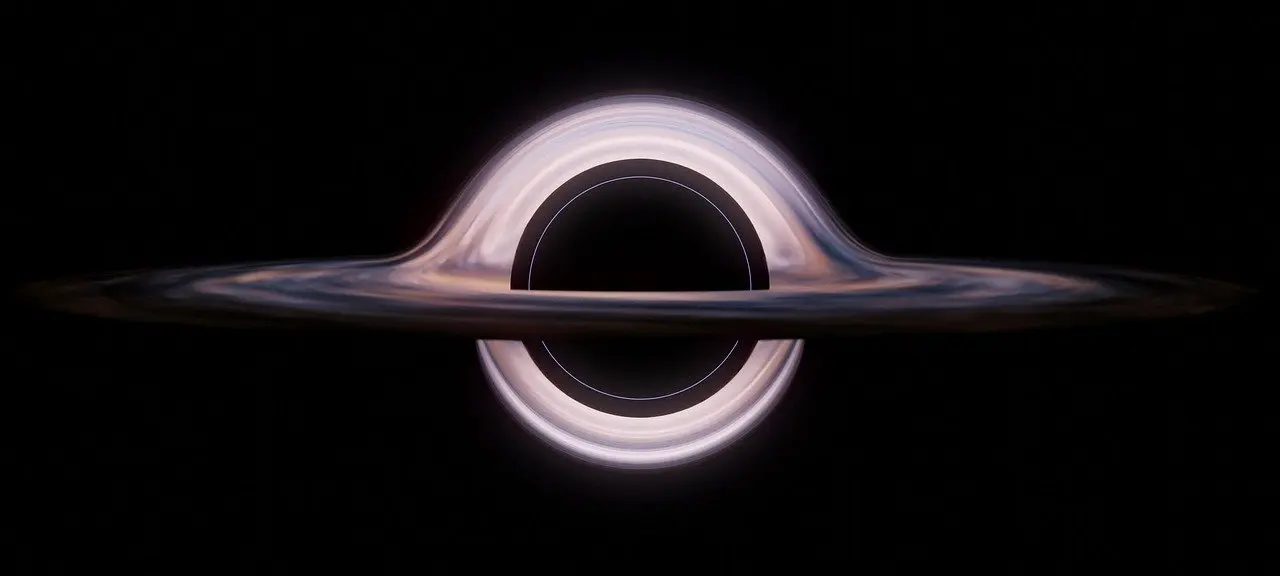
Someone asks what is the opposite of a black hole and expects one named object. The short answer: the white hole, a hypothesized object that pushes matter out, is the usual candidate, and it remains theory rather than observation.
Wormholes, naked singularities and Hawking’s own revisions are often lumped in with white holes, and they are different ideas. Readers who like to test claims against evidence may also enjoy our science hub, which asks is mars habitable in the same spirit. The sections below separate established physics from speculation, starting with what a black hole actually does.
What a black hole does that an opposite must reverse
A black hole is a region where gravity is so strong that, within a certain distance, nothing can escape, not even light. That is the NASA-style definition quoted in a science-and-faith blog. Any proposed opposite has to undo that trapping, so the definition works as the test for every candidate below.
The event horizon
The boundary around a black hole is the event horizon, and anything that crosses it is permanently trapped. The same explainer describes black holes as one-way gravitational traps: nothing escapes after crossing. A true opposite would therefore have to be a two-way or outward-only object. It could not simply be a black hole seen from another angle.
Mass and singularity
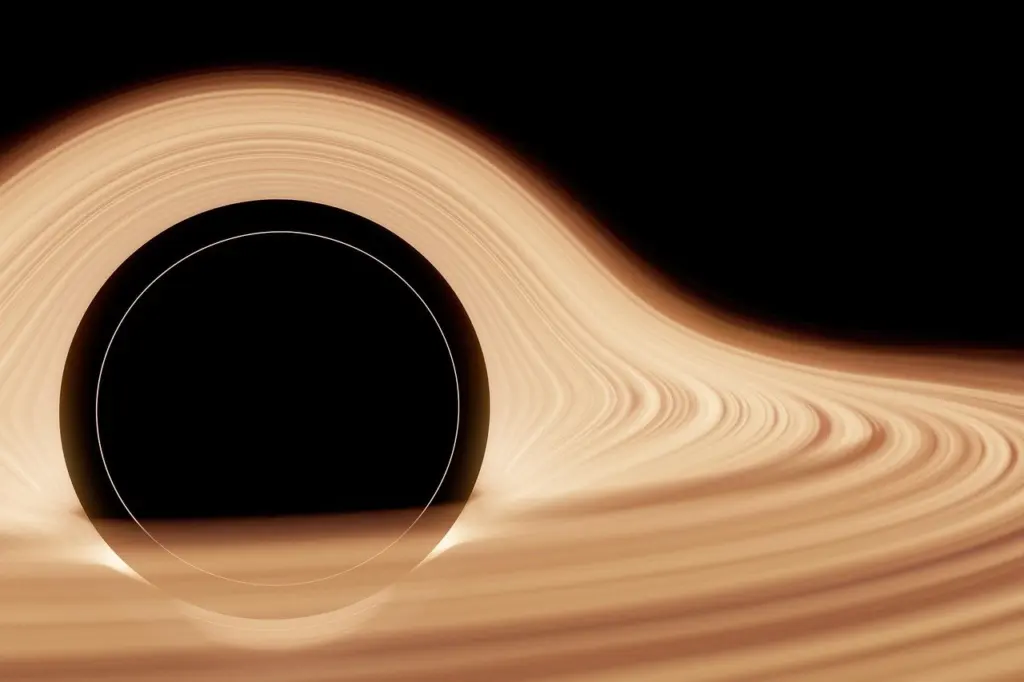
Stellar black holes form when the remaining core of a massive star is more than about three solar masses and collapses. Supermassive black holes reach millions to billions of solar masses, a scale covered in our guide What Is a Supermassive Black Hole? A Clear Guide to Galaxy Titans in 2026 – Decolonizemars.
In relativity, black holes are treated as singularities with an event horizon. Einstein’s theory predicted singularities where, in the blog’s wording, the laws of physics did not apply. Hawking and Roger Penrose later showed that black holes are not rare curiosities but a general feature of relativity. The same source notes that definitions of black holes vary depending on the area of physics involved, so “opposite” depends on which property you reverse.
Black hole and candidate opposites compared
The table sets the black hole beside the two objects most often named as its reverse, using the same criteria for each.
| Object | Behaviour toward matter | Evidence status | Fit as an “opposite” |
|---|---|---|---|
| Black hole | One-way trap; nothing escapes after crossing the event horizon | Forms when a stellar core above about three solar masses collapses; supermassive types hold millions to billions of solar masses | The reference object that any opposite is measured against |
| White hole | Hypothesized to push matter out instead of pulling it in | Hypothesized only | Closest reversal of the trapping behaviour |
| Wormhole | Traversable versions would let objects pass through rather than be trapped | Entirely theoretical; arises from mathematical solutions to Einstein’s general relativity; no evidence it exists in nature | A passage between regions, not an outward-pushing reversal |
Table figures draw on an explainer comparing wormholes and black holes and on a set of study notes for the white hole and wormhole evidence statements.
White holes: the reverse on paper
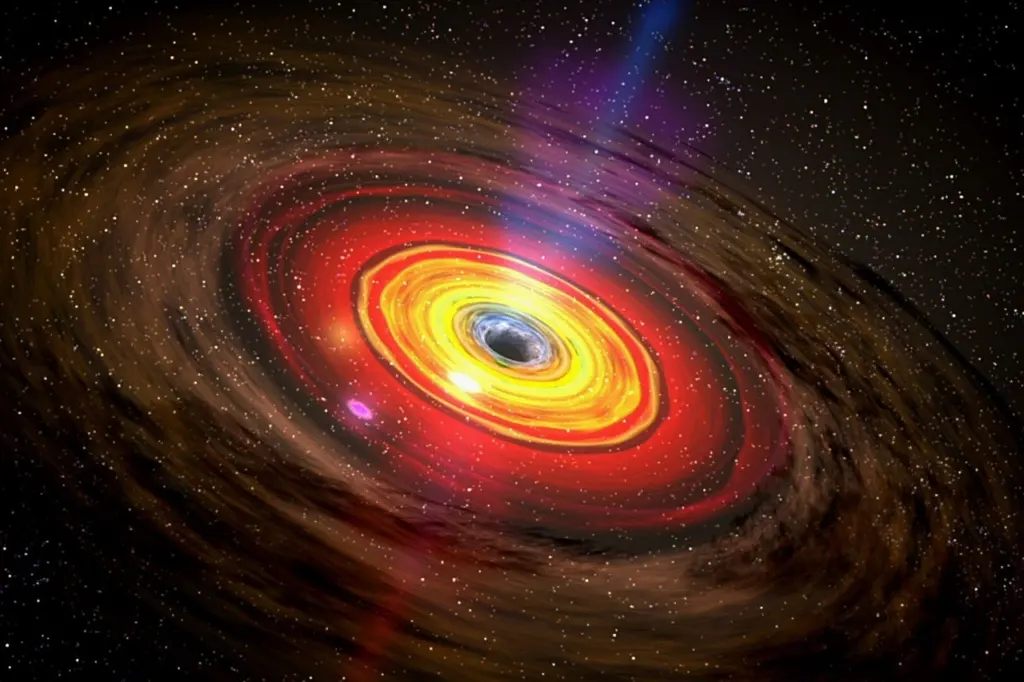
A white hole is the textbook answer to the opposite-of-a-black-hole question because it is hypothesized to push matter out instead of pulling it in. It reverses the one property that defines a black hole, which is why the idea endures.
Do white holes exist? They remain hypothesized objects rather than observed ones, so the honest label is “mathematically conceivable”, not “found”. Treat any claim that a white hole has been detected as unsupported, and treat the white hole as a useful thought experiment about what time-reversed gravity would look like.
Wormholes: a passage, not a reversal
Wormholes are often called the opposite of black holes, but they do something different. They arise from mathematical solutions to Einstein’s general relativity and are not observed objects. The same explainer states that wormholes remain entirely theoretical. A study-notes summary agrees that they could exist mathematically but that there is no evidence they exist in nature.
A wormhole links two regions rather than expelling matter from one point. It fits “opposite” only in the loose sense that matter could pass through instead of being trapped. Keep the two ideas apart: a white hole is defined by outward flow, and a wormhole is defined by connection.
Naked singularities: the missing horizon
A naked singularity is a singularity that is not hidden behind an event horizon. The definition follows from the black hole picture above, in which black holes are singularities with an event horizon. Take away the horizon and the singularity is exposed to the outside universe.
This is an opposite in a narrow sense: it reverses the hiding, not the pulling. A naked singularity would not push matter out the way a white hole is imagined to. It would simply lack the boundary that makes black holes one-way. Because general relativity predicts singularities where its own laws stop applying, a horizonless one raises the sharpest questions about what physics can say.
Hawking radiation and apparent horizons
Stephen Hawking’s work is the most common source of confusion here, so it helps to separate what he proposed from what he did not.
- Radiation as a leak. In the early 1970s, Hawking and Jacob Bekenstein theorized that black holes should emit subatomic particles. This softens the picture of a perfect trap but does not turn a black hole into a white hole.
- Apparent horizons. In 2014, Hawking proposed that gravitational collapse produces apparent horizons but no event horizons behind which information is lost. Those apparent horizons persist for a period of time, and one report says they absorb light, energy and matter, but only temporarily before releasing it.
- No black holes, in one sense. Hawking wrote that the absence of event horizons means there are no black holes, in the sense of regions that permanently trap everything. The same report adds that he did not propose that black holes do not exist in space. What he contested was their properties.
- Weak evidential footing. The report describes the proposal as a two-page paper with no calculations or peer review. Treat it as a stimulating hypothesis, not a settled replacement for the standard picture.
The apparent-horizon idea is the closest the Hawking literature comes to an “opposite”, because it replaces permanent trapping with temporary holding. It is a revision of black holes, though, not a different object.
What observation has actually shown
Observation supports the black hole side of this comparison. On April 10, 2019, the first image of a black hole and its shadow was revealed: the black hole in galaxy M87, captured by the Event Horizon Telescope, an international array of eight ground-based radio telescopes. If you want to know how instruments gather and focus faint signals, our guide How Telescopes Work: A Clear, Practical Guide To Optics, Types, And Choosing One In 2026 – Decolonizemars explains the optics.
General relativity itself has a long record of tests. Observations of starlight during a total solar eclipse in 1919 confirmed that gravity bends light, and the anniversary was marked on May 29, 2019. That track record is why relativity is trusted when it describes black holes. The white hole and wormhole solutions come from the same mathematics, but they have no comparable observational confirmation.
Frequently asked questions
| Question | Answer |
|---|---|
| Can a spacecraft pass through a wormhole? | Only in theory. Traversable wormholes are hypothetical structures stable and wide enough for objects or spacecraft to pass through, and they would require exotic matter to stay open. |
| Who first proposed wormholes? | Einstein and Rosen proposed them in 1935, in a construction known as the Einstein-Rosen Bridge. |
| Has a black hole ever been photographed? | Yes. The Event Horizon Telescope released an image of the black hole in galaxy M87 and its shadow on April 10, 2019. |
| How massive must a stellar core be to become a black hole? | If the remaining core is more than about three solar masses, it collapses into a black hole. |