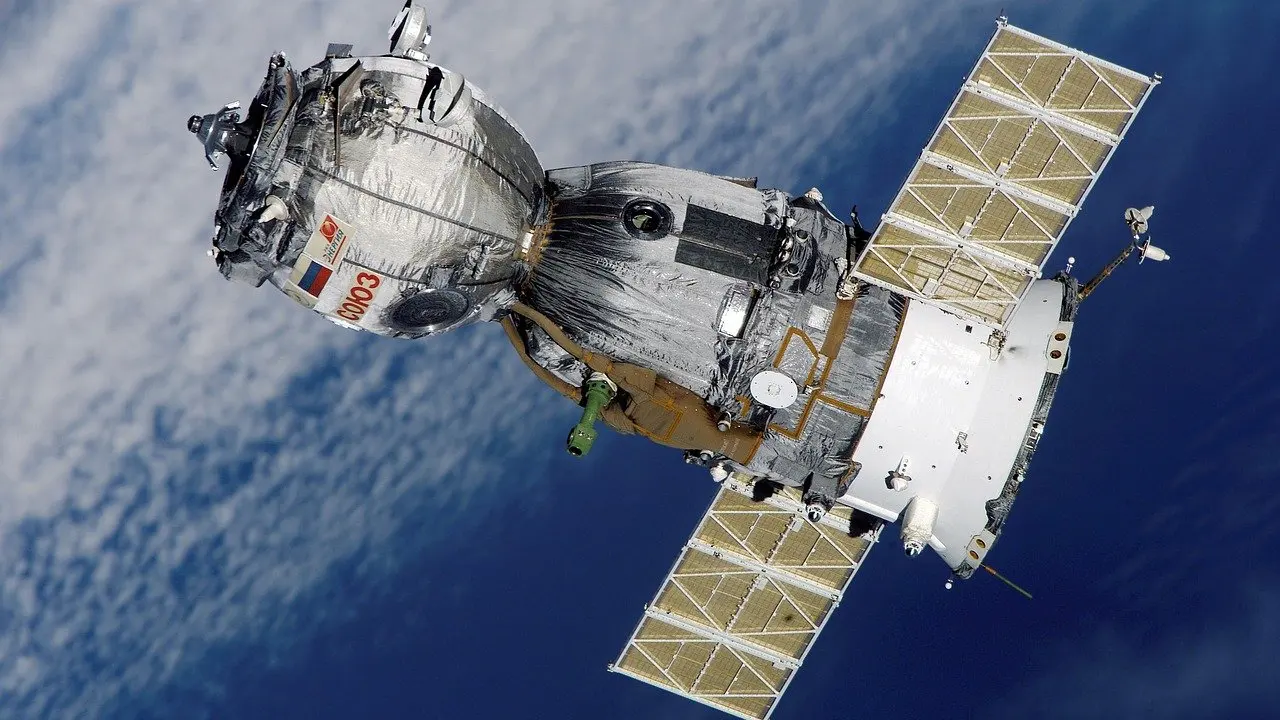
Many people picture satellites hovering in place, yet how do satellites work once launched? Forward momentum balances gravity, so each satellite follows a repeating path around Earth while radio signals carry its data to antennas on the ground.
The sections below correct the usual misunderstandings one at a time: orbits, signals, onboard systems and relay. Relay satellites at Mars are part of the wider technology needed for a mars base, and the Mars section shows how they connect surface robots to Earth.
Orbits and the momentum-gravity balance
The first misunderstanding is that a satellite has escaped gravity, or that there is no pull up there. NASA’s Space Place describes an orbit as a regular, repeating path that one object in space takes around another one. It adds that an object’s momentum and the force of gravity have to be balanced for an orbit to happen. Gravity is part of the mechanism, not something the satellite has beaten.
That balance explains why a satellite does not need to keep pushing itself along. The path repeats because the balance holds. It also explains why an object cannot simply be placed at a height and left there: without the forward momentum, the balance does not exist.
Why orbit height decides speed
A second misunderstanding is that a satellite can fly at whatever speed suits it. Geoversity’s explainer notes that the speed at which a satellite travels depends on the height of its orbit. Orbit height is therefore the first design decision. It determines how fast the satellite moves, and, as the table below shows, how long one lap takes.
Low, polar and geostationary orbits compared
Orbit “types” are really different answers to the question of how high to fly. The table sets the main ones side by side.
| Orbit | Altitude | Time for one lap | Planning use |
|---|---|---|---|
| Low Earth orbit (LEO) | The first 100 to 200 miles of space | About 90 minutes | A quick, repeating loop; the satellite keeps moving relative to the ground |
| Polar orbit | 200 to 1200 kilometres; usually a low Earth orbit | Depends on orbit height | Treat it as a low-orbit option rather than a separate altitude band |
| Geostationary orbit (GEO) | About 23,000 miles (35,786 kilometres) above the equator | One revolution every 24 hours | Holds a fixed view of one position on the planet |
Altitudes and lap times come from NASA Space Place, with the kilometre figures for polar and geostationary orbits from Geoversity.
Low Earth and polar orbits
NASA places LEO in the first 100 to 200 miles of space and says one complete orbit takes about 90 minutes. It also says polar orbits are usually low Earth orbits. Geoversity gives the polar-orbiting range as 200 to 1200 kilometres from Earth. Read the two figures as overlapping descriptions rather than competing ones: the miles describe the lower portion of LEO, and the kilometres describe where polar satellites fly.
The practical reading is that a low orbit is a short, fast loop. A satellite there keeps moving relative to the ground, in contrast to the geostationary case below, where lap time and ground position line up.
Geostationary orbit
In a geostationary orbit the satellite sits about 23,000 miles above the equator and completes one revolution around Earth every 24 hours, matching the planet’s turn. Geoversity gives the distance from Earth as 35,786 kilometres and notes that these satellites look at one position on the planet all the time by moving with the Earth as it turns. “Stationary” therefore describes the view from the ground, not a satellite that has stopped moving.
Choose the right mental model by asking what the satellite must see. A fixed view of one place points to the geostationary column of the table. Repeated quick passes point to the low-orbit rows.
How satellites communicate with the ground
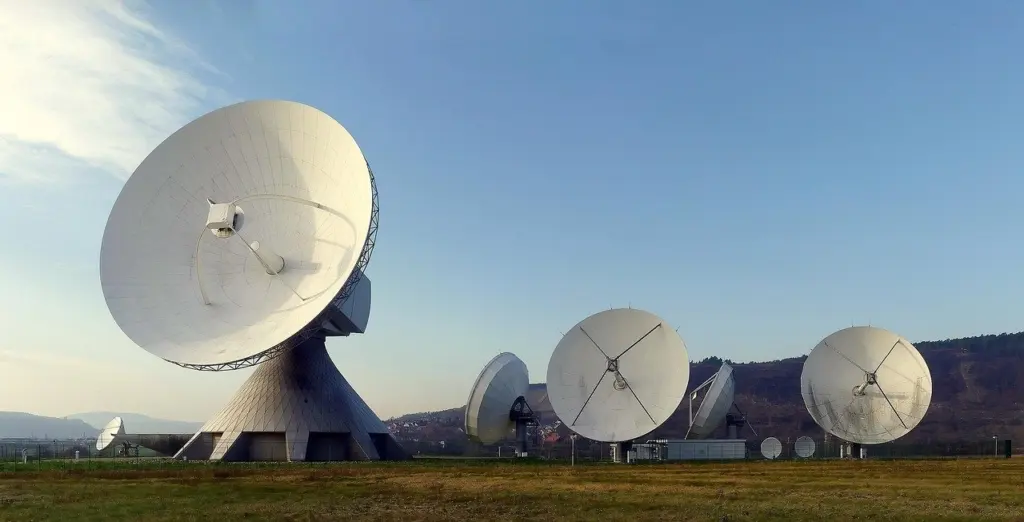
A third misunderstanding is that satellite data simply “arrives”. NASA explains that satellites communicate by using radio waves to send signals to the antennas on the Earth. The antennas then capture those signals and process the information coming from them. Each end of the link has a defined job: the satellite transmits, and the ground station receives and interprets.
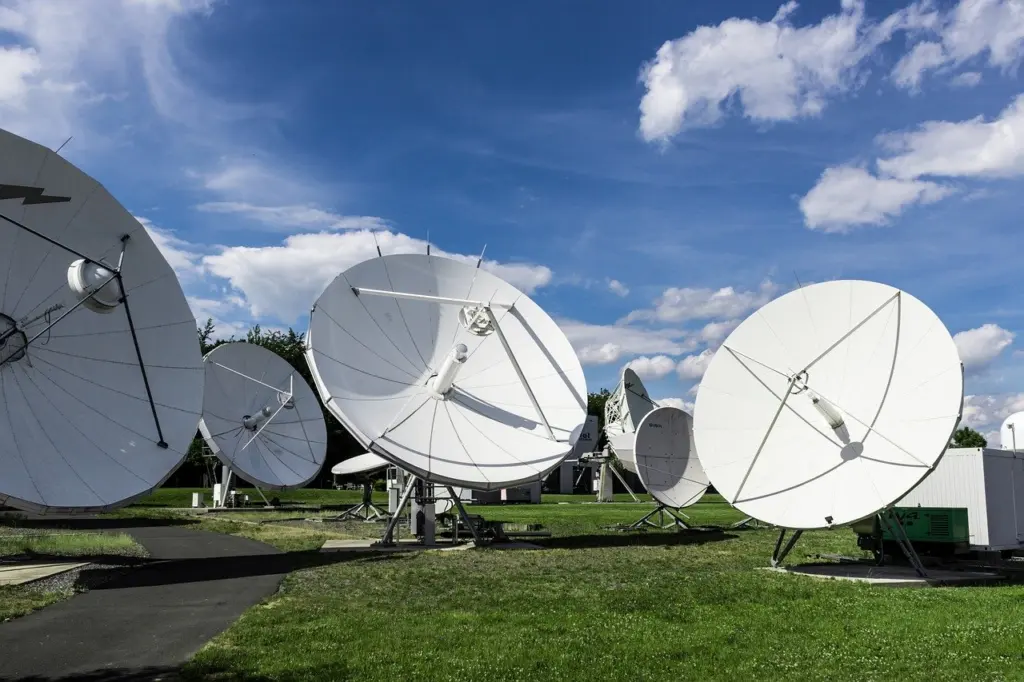
Radio is the natural choice for a reason Geoversity spells out: radio waves are within a wavelength range to which the atmosphere is mostly transparent. A signal sent to the ground has to cross the atmosphere, and radio wavelengths pass through it with little obstruction.
Main satellite subsystems
A satellite is more than a box in orbit. Several subsystems work together to keep it running and useful, and the following are the ones that matter most for understanding the basics.
- Power from solar panels. Solar cells allowed satellites to work for much longer than batteries, according to the Let’s Talk Science backgrounder. For a spacecraft that must operate over a long period, a power source that keeps generating is the safer foundation than a stored supply alone.
- Payload instruments. The payload is the part that does the mission’s work, whether that is observing the planet or carrying communications. Its design depends on what the satellite is meant to detect or relay.
- Communications equipment. Antennas and radio hardware send the satellite’s signals to the antennas on Earth, as described above. Without this link, the data a satellite collects would never reach anyone.
The useful way to hold these together is as a chain. Power keeps the payload and radio running, the payload produces the data, and the radio link delivers it to a ground station.
How Mars orbiters relay rover data
Satellites are not only for Earth. NASA lists the Mars Reconnaissance Orbiter (MRO) among the satellites that observe the Moon and the planets, alongside the Lunar Reconnaissance Orbiter. It is a satellite of Mars in the same sense that a weather satellite belongs to Earth, following an orbit set by the same balance of momentum and gravity.
The relay role follows from the communications job described earlier. The Let’s Talk Science backgrounder notes that satellites can relay signals from Earth to spaceships and to robots like the rovers on Mars. In plain terms, an orbiter can sit between a surface robot and the antennas back home, passing signals along rather than leaving the rover to manage the whole link alone.
The Earth end of that chain looks like the ground stations above: antennas that capture signals and process the information in them. Understanding orbits, radio links and power therefore carries straight over to Mars, where the same ideas apply with a much longer path.
Further context beyond Earth orbit
Orbit is also where people live and work in space. For a look at daily routines there, see How Do Astronauts Sleep? What Space Sleep Looks Like In 2026 – Decolonizemars. For a different idea about reaching orbit with cables rather than rockets, read Space Elevator Explained: How Earth-To-Orbit Cables Could Transform Space Access By 2035 – Decolonizemars.
Frequently asked questions
| Question | Answer |
|---|---|
| Which early satellite used solar cells? | Vanguard I used solar cells instead of a battery, according to the Let’s Talk Science backgrounder. |
| What can satellite instruments detect? | Most satellites’ instruments detect radiation, from light waves to radio waves, as Geoversity explains. |
| Is the Mars Reconnaissance Orbiter a satellite? | Yes. NASA lists the Mars Reconnaissance Orbiter among satellites that observe the Moon and the planets. |