| Planet | Rotation period | Planning use |
|---|---|---|
| Jupiter | About 10 hours (rounded); 9 h 55 min 30 s (precise) | Quote the rounded value in general writing and the precise value when other figures in the comparison also carry minutes and seconds. |
| Mars | About 25 hours (rounded); 24 h 37 min 22 s (sidereal) | Treat it as the near-Earth comparison. Its day is close to Earth’s, unlike Jupiter’s. |
| Earth | Solar day about 24 hours; sidereal day almost 23 h 56 min (23 h 56 min 4.1 s) | Use the solar day for clock comparisons and the sidereal day for rotation comparisons. |
| Saturn | 11 h | The closest rival to Jupiter’s short day in this list. |
| Neptune | 16 h | Quote it as a single figure only when the surrounding text is also rounded. |
| Uranus | 17 h | Shows that all four giants spin in well under an Earth day. |
| Mercury | 1408 h (58.64 Earth days) | Convert to Earth days, because hours are hard to read at this size. |
| Venus | 5832 h (243.025 Earth days) | The slowest rotator here. Express it in Earth days. |
Rotation figures come from NASA Space Place for the rounded hours and from WorldAtlas for the minute-and-second values and Earth-day conversions.
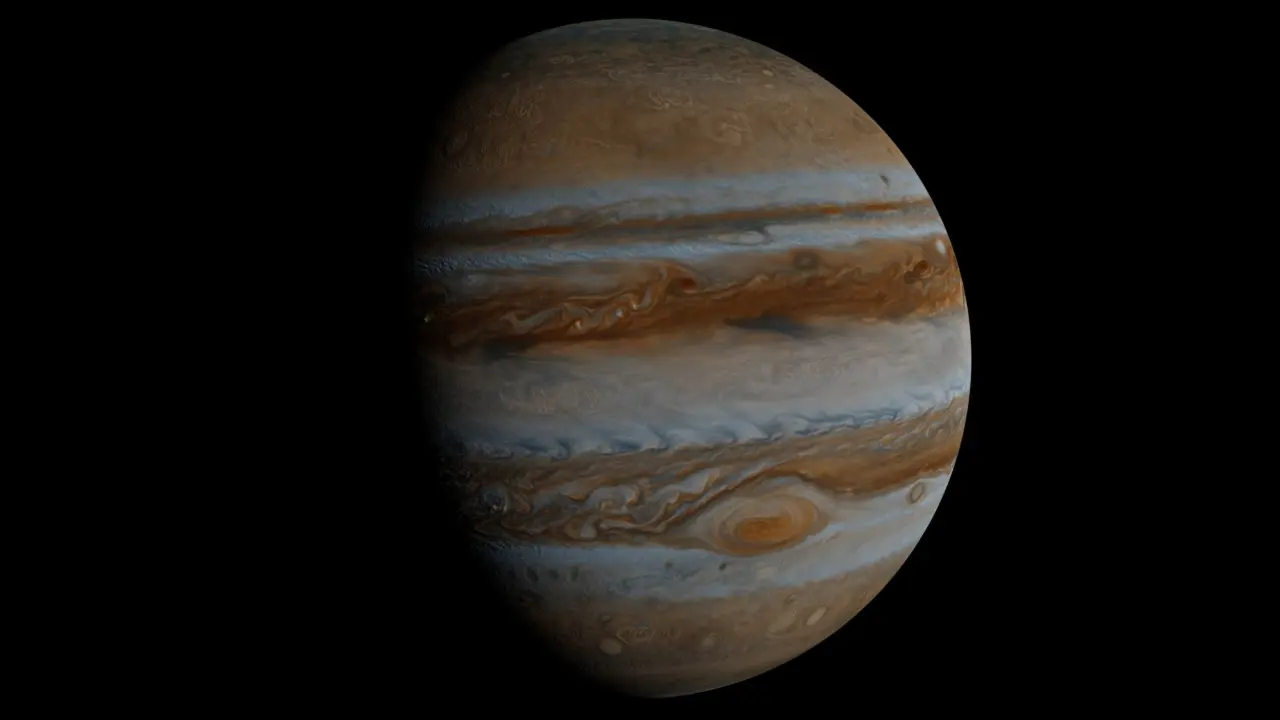
How long is a day on Jupiter? About 10 hours by NASA’s rounded figure, or 9 h 55 min 30 s by WorldAtlas. The exact value depends on which part of the planet is timed.
Planetary day length matters most for destinations people might actually reach, which is why the Mars exploration hub starts from the question can humans live on mars. Jupiter is a useful contrast, because its day is among the shortest in the solar system.
Which Jupiter day length to use
Published Jupiter day lengths sit close together, so the right figure depends on how precise your comparison needs to be. Match the figure to the job and keep to one source within a single comparison.
- General writing, teaching and quick comparisons: use about 10 hours, the rounded figure on NASA Space Place. It sits naturally next to Earth’s solar day of about 24 hours and Mars’s 25 hours from the same page, so the numbers are consistent.
- Tables with minutes and seconds: use 9 h 55 min 30 s from WorldAtlas. The same article gives Mars as 24 h 37 min 22 s and Earth as 23 h 56 min 4.1 s, so the precision matches across all three.
- A figure that looks slightly off: CK-12 gives 9 h 50 min. That is a little shorter than the other two values. Do not place it in the same table as the 9 h 55 min 30 s figure, because the gap would read as a real difference between planets or measurements.
The practical rule is simple. A rounded number is fine for a headline, and a precise number belongs only where the neighbouring values are equally precise. Mixing sources inside one comparison is the easiest way to make a planet’s day look different from what any of those sources says.
Jupiter’s day next to Mars and Earth
Jupiter’s day is far shorter than Earth’s, while Mars’s day lands close to Earth’s. That contrast is the main reason the Jupiter figure surprises people who expect a giant planet to turn slowly.
Against Earth
NASA Space Place puts Earth’s solar day at about 24 hours and Jupiter’s day at about 10 hours. Earth completes one turn relative to the stars in almost 23 hours 56 minutes. Even on that tighter measure, Jupiter turns a great deal faster, despite being far larger. WorldAtlas links the fast spin to Jupiter’s non-solid body, so Jupiter’s day is best read as a rotation period of a gas planet, not a sunrise-to-sunrise routine on a surface.
Against Mars
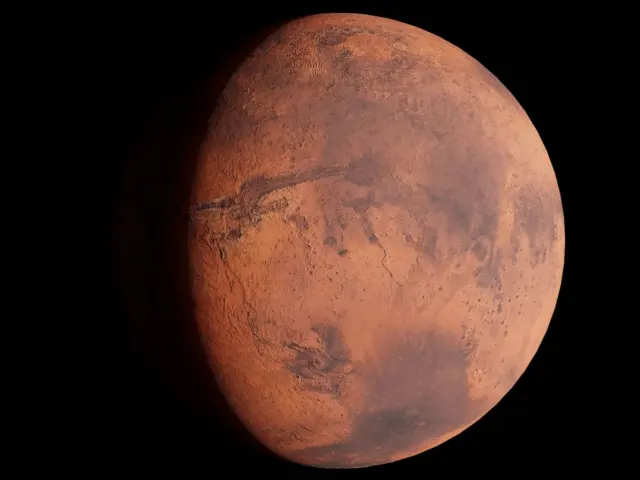
Mars is the comparison that matters most on this site. NASA gives Mars a day of about 25 hours, and WorldAtlas gives its sidereal rotation as 24 hours 37 minutes 22 seconds. Both place Mars close to Earth and nowhere near Jupiter. If you want the Martian day explained in its own right, including how its solar day is defined, read How Long Is a Day on Mars? The Martian Sol Explained (2026 Guide) – Decolonizemars.
Against the other planets
- The giant planets: NASA lists Saturn at 11 h, Neptune at 16 h and Uranus at 17 h. Jupiter is the shortest of this group, and Saturn is the nearest to it.
- The inner planets: NASA gives Mercury 1408 h and Venus 5832 h. WorldAtlas converts these to 58.64 Earth days and 243.025 Earth days, which is the better unit to quote. Reading them in hours hides how different they are from the gas giants.
Choose the comparison to fit the point you are making. Set Jupiter against Saturn to show how similar the largest planets are. Set it against Venus to show the full range of rotation in the solar system. Set it against Mars to link the gas giant back to Earth-like day lengths.
Sidereal day versus solar day
A sidereal day is the time a planet takes to turn once fully, and a solar day is the time from one noon to the next. NASA Space Place describes the sidereal day as one complete turn, and gives Earth’s as almost 23 hours 56 minutes against a solar day of about 24 hours.
The gap exists because a planet also moves along its orbit while it turns. Durham University’s AstroLab notes that one sidereal day is 23 solar hours and 56 solar minutes on Earth, and that a given star rises or sets about four minutes earlier each day. Rotation tables such as WorldAtlas’s measure one turn on the axis, which is the sidereal idea. That is why a table can sensibly set Jupiter’s 9 hours 55 minutes 30 seconds beside Earth’s 23 hours 56 minutes 4.1 seconds rather than beside 24 hours.
For decisions, the rule is consistency. If your Jupiter figure is a rotation period, set it against Earth’s sidereal day. If you are describing the length of a clock day on Earth, say that you are using the solar day. Mixing the two introduces a few minutes of difference that has nothing to do with Jupiter.
Differential rotation on Jupiter
Not every part of Jupiter turns at the same rate. WorldAtlas ties Jupiter’s rotation to its non-solid body and reports that the rotational speed at the equator is higher than at the poles. This pattern is called differential rotation. A single day length for Jupiter is therefore a headline value for the whole planet, not a promise that every latitude completes a turn in the same time.
The same article shows how large the effect can be on another giant. On Neptune the equatorial zone takes approximately 18 h per rotation while the extreme poles take about 12 h, the largest difference in its list. Neptune’s headline figure on NASA’s list is 16 h, which sits between those two extremes. That is a useful reminder that one rounded number can summarise a wide spread.
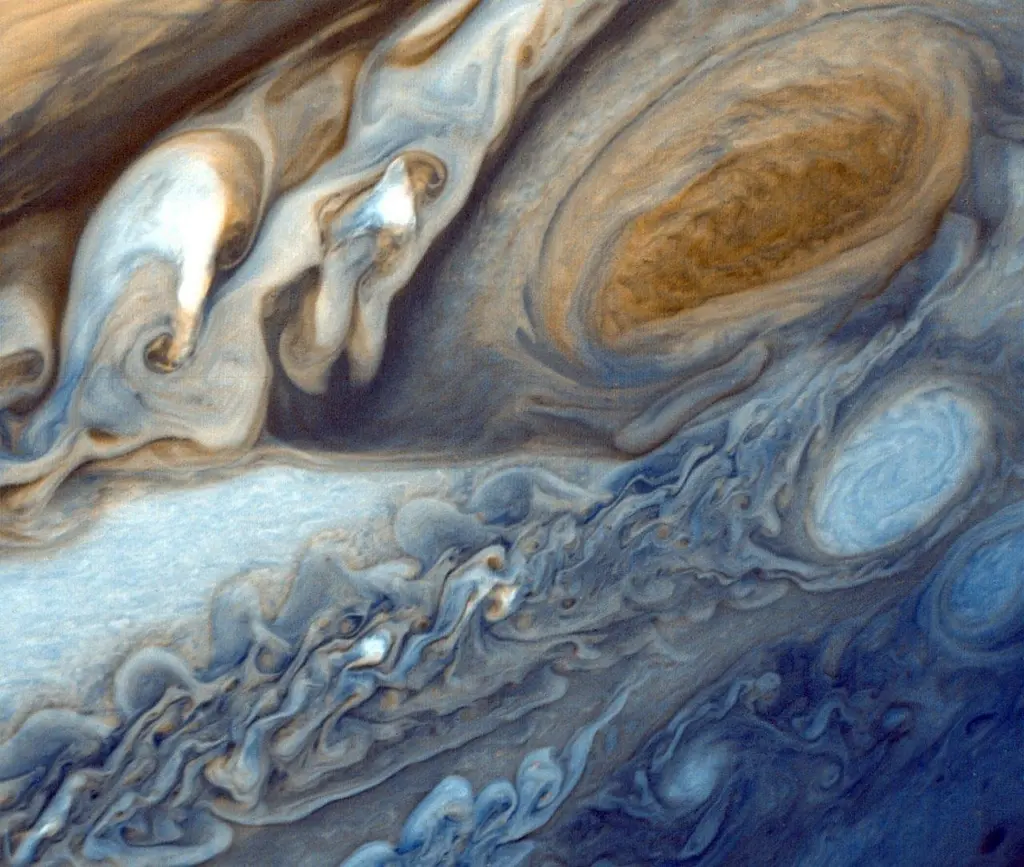
In practice, state which value you mean. Call 9 h 55 min 30 s the planet’s day or rotation period, and say plainly that different latitudes turn at different rates. If you ever need a figure for a specific band of clouds, a headline number will not do, and you should use a value for that latitude.
Related reading
People who have flown in space rather than the planets they study are covered in Trailblazers In Space: 10 Famous Female Astronauts Who Changed Spaceflight – Decolonizemars.
Frequently asked questions
Which planet in the comparison has the shortest day?
Jupiter does, at about 10 hours on NASA’s list. Saturn is next at 11 h, followed by Neptune at 16 h and Uranus at 17 h.
Which planet has the longest day?
Venus, at 5832 h according to NASA, which WorldAtlas converts to 243.025 Earth days. Mercury follows at 1408 h, or 58.64 Earth days.
How long is a year on Jupiter?
Jupiter takes around 11.86 Earth years to complete one revolution around the Sun, according to CK-12. That is a very long year set against a very short day.