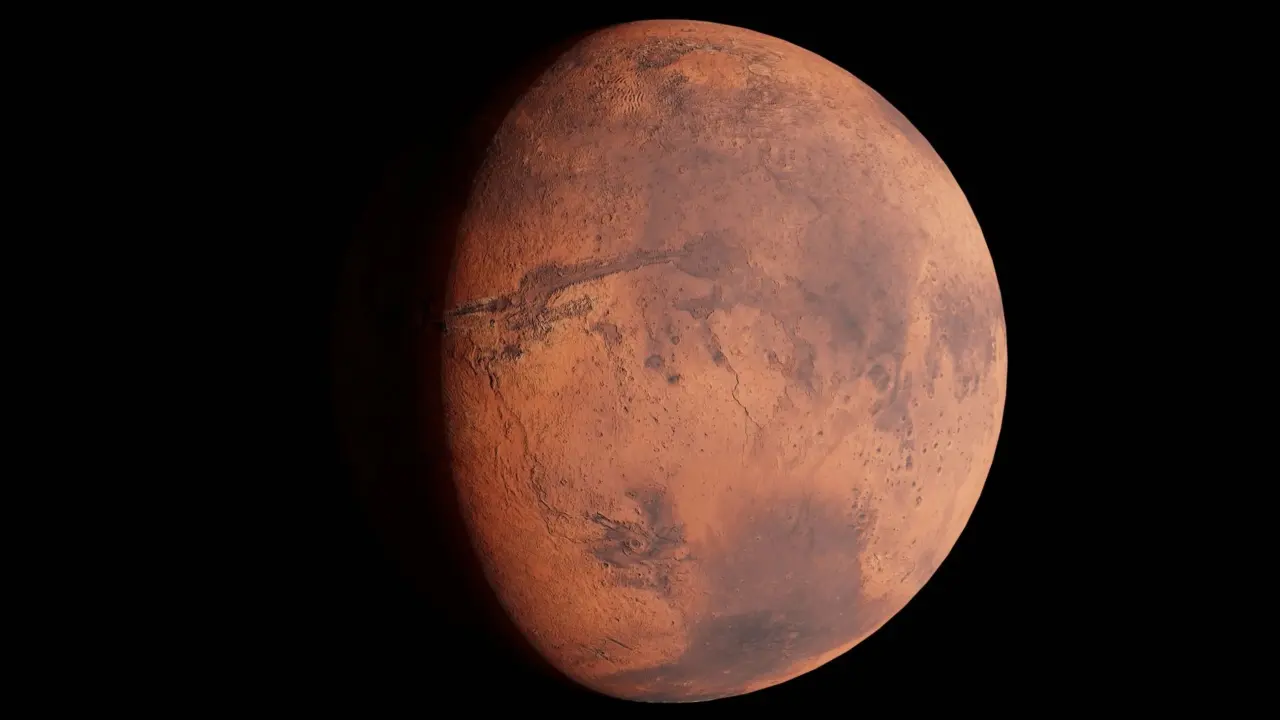
Someone asks for fun facts about Mars expecting a smaller copy of Earth. The quick answer, per NASA: Mars is about half Earth’s size, has about one-third Earth’s gravity and a carbon-dioxide atmosphere, and its year lasts 687 Earth days.
Each fact below corrects a common misunderstanding, and together they frame the larger question of can humans live on mars, which the Mars exploration and settlement hub treats in full.
Mars is not a smaller Earth
Mars differs from Earth on almost every measure that matters for living there. NASA describes it as about half the size of Earth, and the Planetary Society gives a diameter of 6,780 km (4,212 miles), with Earth 1.9 times larger. Gravity is 3.73 m/s², or 38% of Earth’s, according to the Planetary Society, while NASA’s rounder wording is about one-third. Use the 38% figure when precision matters and one-third when a quick phrase will do.
| Common assumption | What the evidence shows | Planning use |
|---|---|---|
| Mars is much smaller than Earth | About half Earth’s size; diameter 6,780 km (4,212 miles), with Earth 1.9 times larger | Treat Mars as a distinctly smaller world in any like-for-like comparison. |
| Gravity feels familiar | 3.73 m/s², or 38% of Earth’s; NASA says about one-third | Expect a much weaker pull than on Earth’s surface. |
| A day matches ours | 24.6 hours (NASA); the Planetary Society lists the solar day as 25 Earth hours | Quote the NASA value for a Martian day and name which measure you use. |
| A year is a year | 687 Earth days | Convert Martian years to Earth days before comparing schedules. |
| It is cool, not cold | Average temperature of minus 80 degrees Fahrenheit | Read it as an average, not a forecast for any one place or hour. |
| The air is thin but usable | More than 95% carbon dioxide and much less than 1% oxygen | Plan for life support rather than ambient air. |
| It sits at Earth-like distance from the Sun | On average, more than 142 million miles from the Sun | Use as an average distance for orientation. |
Figures come from NASA’s Mars overview for students and the Planetary Society’s Mars profile.
The distance row is only an average, and How Far Is Mars From the Sun in AU? A Clear Guide for 2026 – Decolonizemars sets out the Sun distance in astronomical units.
- Quoting a day length: A figure of 24.6 hours and a figure of 25 Earth hours describe the same planet, so state the source and the measure rather than mixing them in one comparison.
- Reading temperatures: An average hides range. It tells you Mars is cold overall, not what any landing site experiences on a given afternoon.
- Reading the atmosphere: Carbon dioxide dominates and oxygen is a trace, which is why any crewed concept starts from sealed habitats and supplied breathing gas.
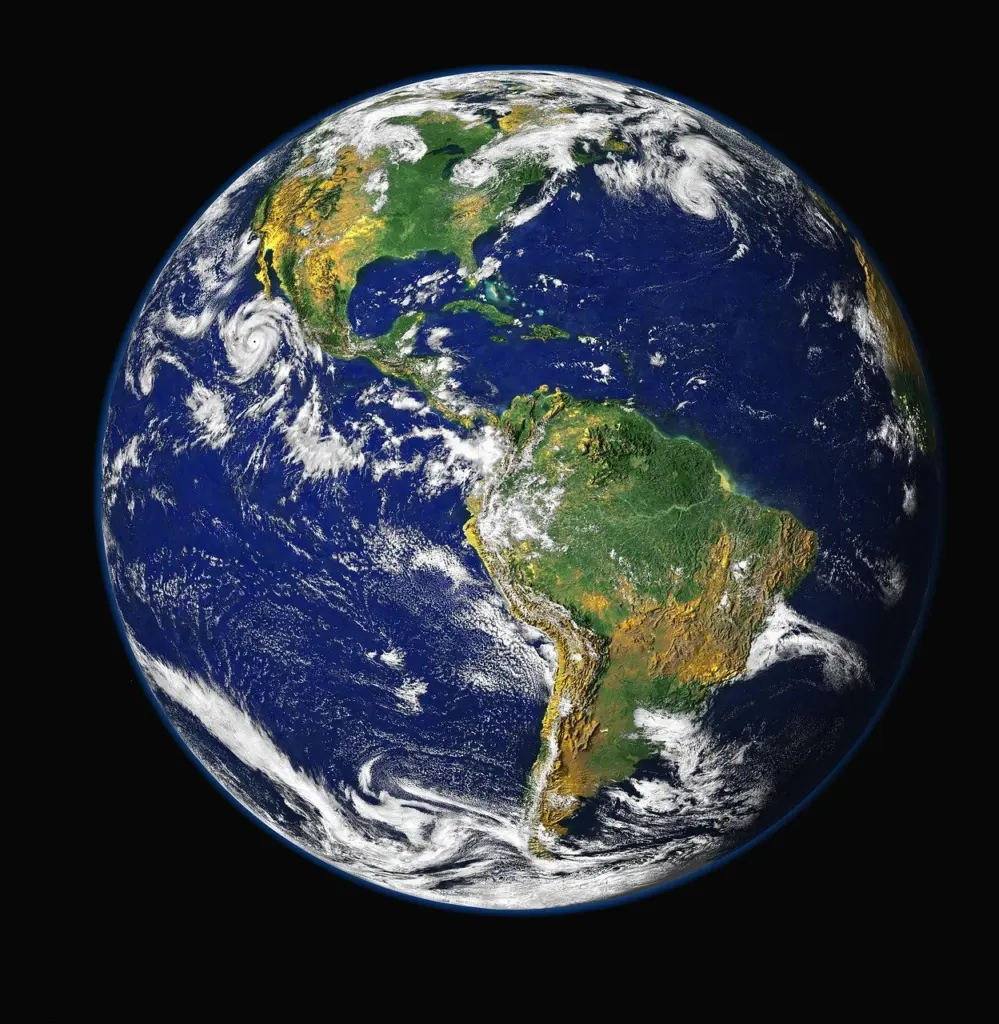
Olympus Mons, Valles Marineris and a restless interior
Mars holds the largest volcano and the largest canyon known in the Solar System. According to the Smithsonian National Air and Space Museum, Olympus Mons rises nearly 16 miles (25 km) and is the largest volcano not only on Mars but in the entire solar system.
How tall is Olympus Mons, and why does height understate it?
Height alone undersells the volcano. The same Smithsonian account notes that its base is so wide it could cover the entire state of Arizona. A visitor standing on its flank would find the slope so broad that the summit would not read as a peak at all. That makes Olympus Mons a better example of scale than of steepness.
Valles Marineris
The Planetary Society credits Mariner 9 with discovering Valles Marineris, the largest canyon in the Solar System. Together with Olympus Mons, the canyon is the usual answer when people ask for the planet’s most surprising landforms, and both are features of a planet whose surface still carries a long geological record.
A planet that still shakes
A common assumption is that Mars is geologically silent. The Smithsonian reports that InSight recorded more than 1,300 marsquakes over roughly four years, so the interior is measurably active enough to be studied by seismology.
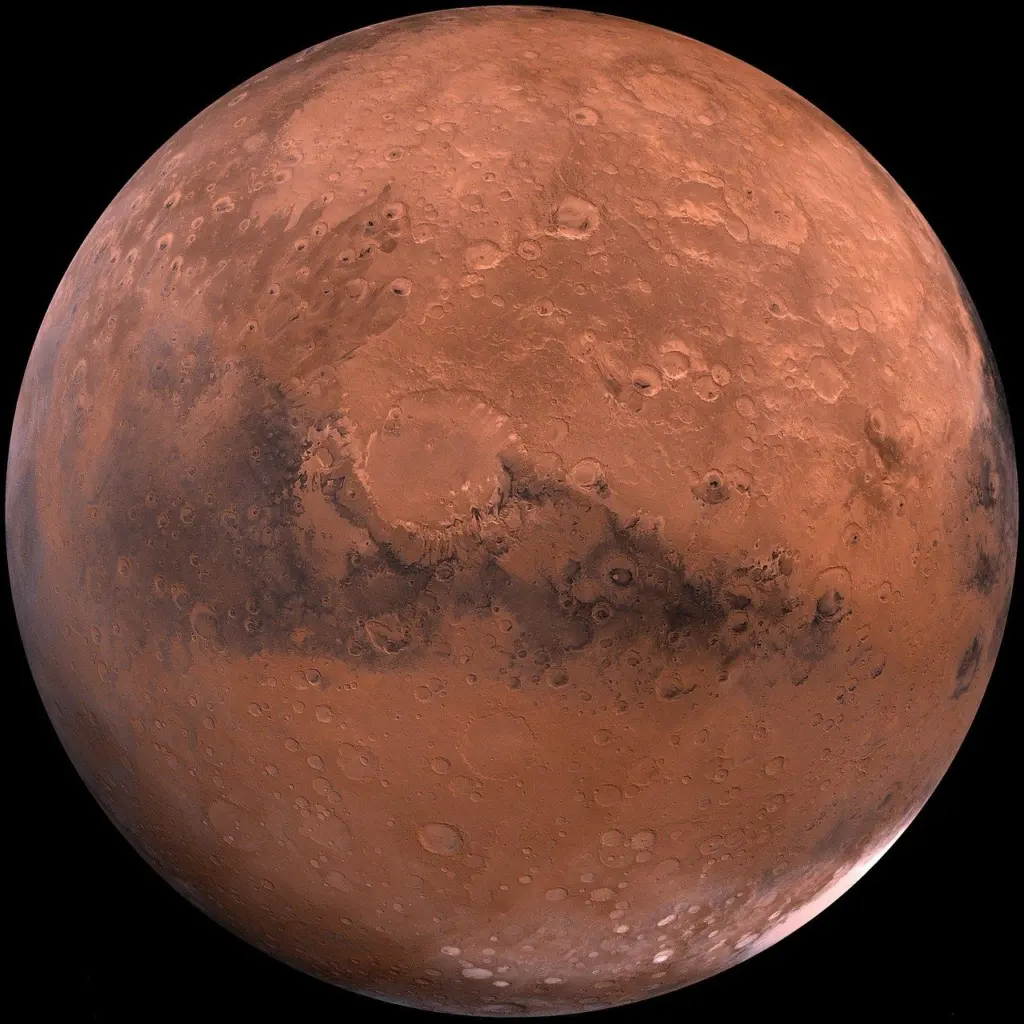
Water on Mars: past flow and buried ice
Yes, there is water on Mars, but the best-supported evidence concerns ancient flow and ice below the surface. NASA reports that the rovers Spirit and Opportunity found evidence that water once flowed on Mars when they found minerals that only form in water.
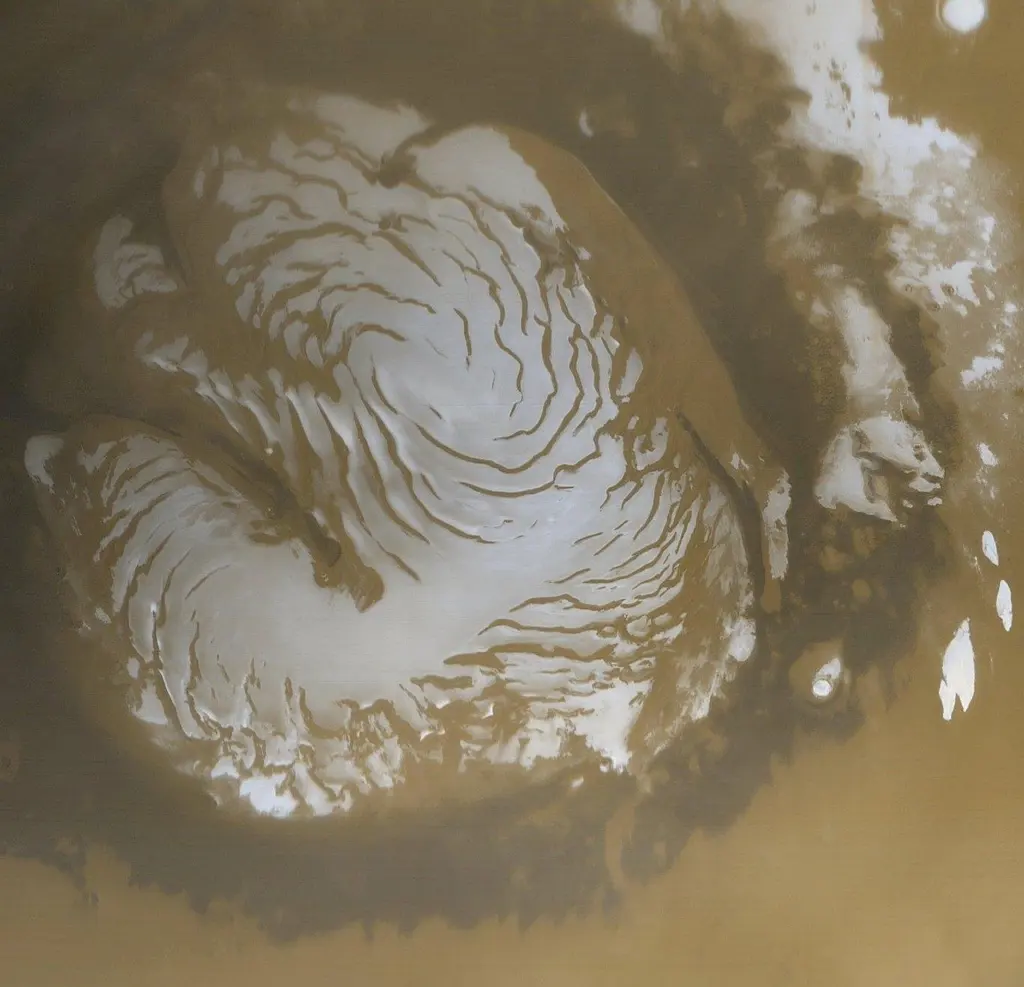
Ice is the other half of the answer. The Planetary Society notes that the subsurface holds enough ice to cover the planet with a layer of ocean more than 20 meters deep. That estimate describes ice that could be spread out, not an ocean that exists, so read it as a measure of how much water the planet stores rather than as a sign of standing liquid.
The distinction matters for two audiences. For scientists, water-formed minerals show that surface conditions changed over time. For anyone thinking about human presence, buried ice is a resource question tied to where it lies and how it could be reached, and those details are not settled by a single figure.
NASA’s account of the Spirit and Opportunity result is at its Mars overview for students.
Phobos and Deimos are not a copy of our Moon
Mars has two moons, Phobos and Deimos, and they behave very differently from each other. The Smithsonian records that astronomer Asaph Hall found them in 1877.
Phobos circles the planet three times every Martian day. Deimos, slightly farther out, moves more slowly and completes one orbit in about 30 hours. The pair is a useful contrast: the nearer moon moves fast and the farther one slowly, which is the pattern you would expect from objects at different distances from the same planet.
Which rovers and missions have explored Mars
Exploration of Mars has moved from flybys to landings to roving laboratories.
- 1965, Mariner 4: NASA says the flyby returned the first close-up images of another planet by a NASA spacecraft, via its Mars overview for students.
- 1976, Viking 1 and Viking 2: These were the first NASA spacecraft to land on Mars.
- The rover line: The Planetary Society names Spirit, Opportunity, Curiosity and Perseverance as rovers that have helped advance understanding of Mars.
- Curiosity: It photographed a sunset in Gale crater in which the horizon appears bluish, an image the Smithsonian highlights as one of its fun facts.
- 2021, Perseverance: The rover began collecting soil and rock samples in 2021, and the Planetary Society reports that Mars Sample Return was slated to bring them to Earth in 2030, a schedule now in flux.
For a quick answer to which rovers have explored Mars, the rovers named by the Planetary Society are Spirit, Opportunity, Curiosity and Perseverance. Treat the 2030 return date as a plan under review rather than a promise.
From fun facts to a settlement question
Facts describe Mars; they do not decide what people should do there. The Planetary Society states that there are currently no NASA missions slated to put humans on or around Mars, so any crewed future remains an open proposal rather than a scheduled programme.
Distance already shapes how operations work. The Planetary Society gives the average round-trip time for rover signals as 25 minutes. A rover can wait for instructions, but a crewed settlement would have to make many decisions locally, which raises the question of who holds authority when Earth cannot answer in real time.
That is the useful way to read the earlier facts. Weak gravity, a carbon-dioxide atmosphere, cold averages and buried ice are conditions any settlement would have to work with, and they also raise questions about who decides, who benefits and what happens to a planet whose past water record is still being read. Living On Mars: How Humans Could Survive And Thrive On The Red Planet By 2035 – Decolonizemars takes up the practical side of that question.
Frequently asked questions
| Question | Answer |
|---|---|
| How long is a year on Mars? | A year on Mars is 687 Earth days, according to NASA. |
| How tall is Olympus Mons? | It rises nearly 16 miles (25 km), per the Smithsonian National Air and Space Museum. |
| How long do signals take to reach Mars rovers? | The Planetary Society gives an average round trip of 25 minutes. |
| Are any crewed Mars missions planned? | The Planetary Society notes that no NASA missions are currently slated to put humans on or around Mars. |