Was the Moon landing science or space race propaganda? Both. Each superpower used real spaceflight feats to argue its political system was superior, and the engineering and the messaging were built together.
A museum visitor who sees a heroic cosmonaut poster next to a Saturn V stage might assume only one side played this game. Both did, and the same habit of selling space as national conquest returns whenever people ask who owns mars.
Why spaceflight became proof of national strength
Spaceflight became a propaganda asset because it was already a military story. The Smithsonian National Air and Space Museum describes the Space Race as growing out of the Cold War between the United States and the Soviet Union and as starting as an arms race in post-war rocketry. Each side sought to demonstrate its superiority through impressive feats in rocketry and spaceflight, and the technologies involved also had military applications, such as rockets as missiles and satellites for surveillance.
That overlap explains why a launch carried so much weight with audiences. The Miller Center notes that space became the final frontier for the two powers to compete, and that dominance in the skies was treated as far more important than land battles. A rocket was therefore read as a statement about power, not only about discovery.
A July 1959 summary of audience reaction, preserved in NASA’s history archive, put the effect plainly: reaction to space developments from all audiences showed a clear tendency to equate achievements in this field with military power. The table below sets common assumptions against what the evidence supports.
| Common assumption | What the evidence shows | Planning use |
|---|---|---|
| Early missions were mainly about science | The Space Race started as an arms race, and spaceflight technology had military applications. | Read each early mission as a defence signal as well as a scientific one. |
| Space feats persuaded without anyone noticing | The USIA summary records a marked awareness of propaganda effects and even assumed propaganda intentions. | Do not treat audiences as passive; messaging worked even when people suspected it. |
| Prestige and security were separate matters | Audiences tended to equate achievements in space with military power. | Treat prestige claims as arguments about strength. |
| Only one side exploited its firsts | The USIA summary says the USSR vigorously exploited the change in its world image after Sputnik in propaganda and diplomacy. | Check both sides’ framing, including the American response. |
The figures and findings above come from the Smithsonian’s Space Race overview and the NASA-hosted July 7, 1959 USIA summary.
Timeline of key propaganda moments
The propaganda value of the Space Race clustered around a handful of dated events. Each one gave a government a story that was easy to repeat.
- October 4, 1957, Sputnik 1. The Soviet Union launched the first human-made object into orbit, according to the Smithsonian. The Miller Center adds that it sparked fear across the globe and passed over the United States multiple times a day.
- November 3, 1957, Sputnik II. Laika became the first animal in orbit aboard the second satellite, which gave the Soviet programme a second headline within weeks, as the Smithsonian records.
- July 7, 1959, USIA assessment. A US summary concluded that Sputnik had changed the world’s image of the USSR, a fact the USSR had vigorously exploited in its propaganda and diplomacy, as shown in the NASA archive.
- April 12, 1961, Vostok 1. Yuri Gagarin became the first person in space and the first to orbit the Earth, according to the Miller Center.
- May 25, 1961, Kennedy’s Moon goal. The president announced the goal of landing a man on the Moon, and the Miller Center dates his promise of a landing by 1970 to a special joint session of Congress.
- July 16 to 20, 1969, Apollo 11. Neil Armstrong, Buzz Aldrin and Michael Collins fulfilled that promise, and the landing was framed as an American victory.
Soviet messaging: firsts, posters and myths
The Soviet approach was to turn each first into a national celebration. The Santa Clara University exhibit on Soviet propaganda in the 1960s says the state celebrated its achievements in space and technology, and that it used its strong propaganda machine to celebrate the success of Vostok 1 in April 1961.
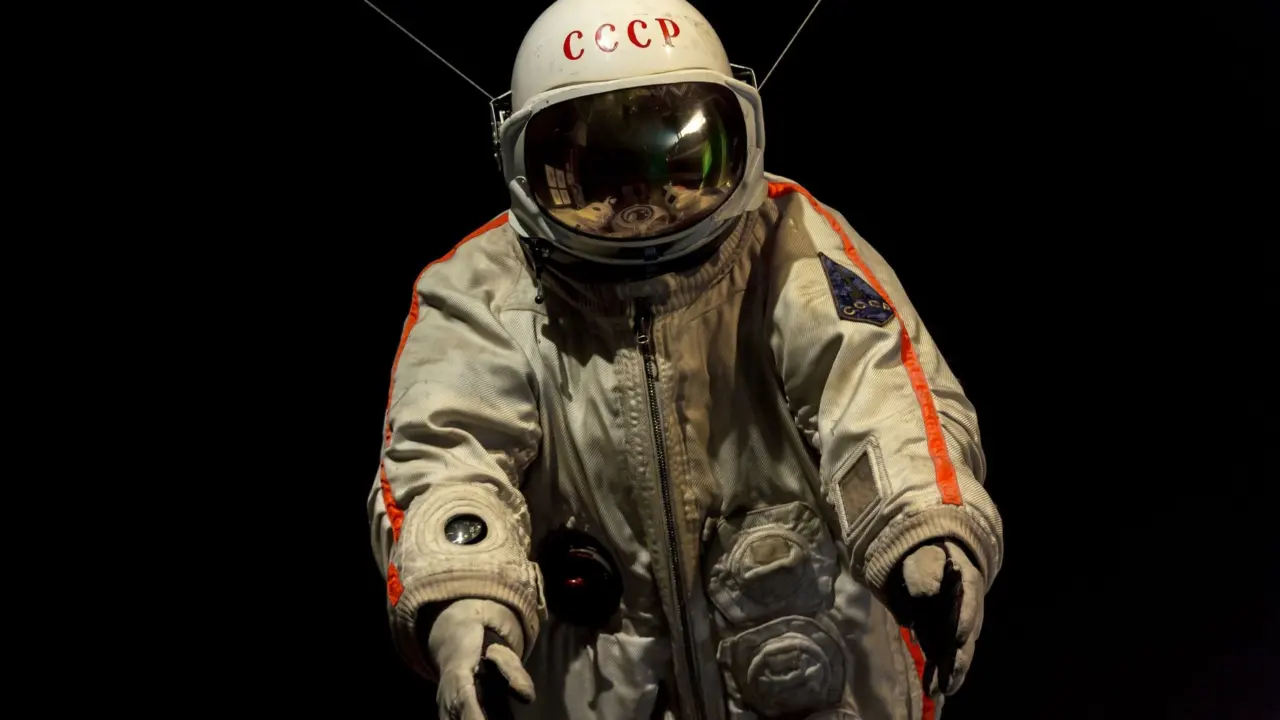
The exhibit also shows a poster of a cosmonaut with the hammer and sickle, surrounded by red stars. Each star resembles one of the Vostok missions. The poster is undated in the exhibit, but it sits in the 1960s section. The design ties a sequence of flights to a political emblem, so the viewer reads a series of launches as a record of the system itself.
Scholarship cited in that exhibit (Gerovitch, 2015) describes the wider effort as creating and disseminating space myths and suppressing counter memories. That is a useful corrective to a common misconception: the message was not only what got shown, but also what was left out of public memory.
Soviet messaging also faced outward. The July 1959 USIA summary says that Soviet propaganda and diplomacy sought assiduously to cultivate uneasiness among Western allies. The audience was therefore never only domestic.
American messaging: the Moon as a national goal
The American response shifted the contest to a target the country could win. Before a special joint session of Congress on May 25, 1961, President John Kennedy quelled fears of a Soviet victory in space and promised a man on the Moon by 1970, according to the Miller Center. A speech like that works as propaganda because it gives the public a single, dated goal to rally behind.
The language of conquest followed from the competition itself. When dominance in the skies is treated as proof of superiority to the world, a landing becomes a national achievement rather than a shared human one. The Miller Center’s account of Apollo 11 says that more than a billion people viewed the landing, according to its estimate, and that the United States had won the Space Race, a competition more significant than any earthly battle. Battle, victory, frontier and dominance are all the vocabulary of territory, even though the Moon was not claimed in the usual sense.
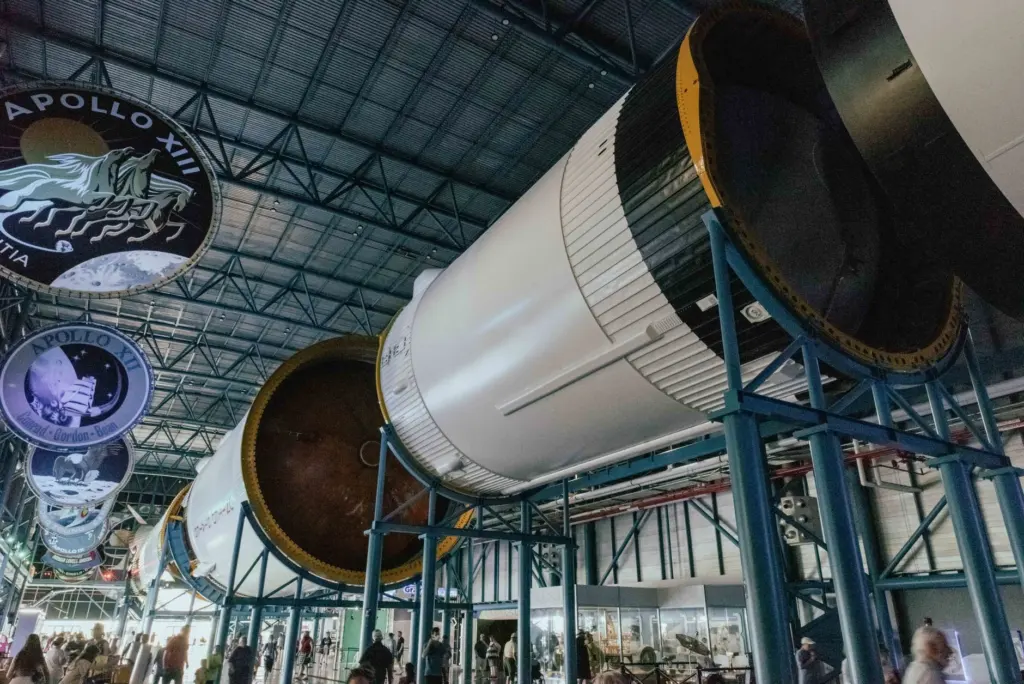
The Miller Center’s framing is a retrospective summary, not a contemporary speech, so it shows how the event is remembered as much as how it was sold. Even so, the pattern is consistent across the sources: the feat was packaged as a verdict on whole political systems.
From Moon race to Mars rhetoric
The Moon race matters for Mars because its vocabulary has outlived its politics. Words such as frontier, victory and dominance made spaceflight sound like a territorial contest, and that framing shapes how new missions are heard. When a modern Mars plan is described in those terms, it is worth asking which audience the language is built for and what it leaves out.
- Check who is being persuaded. Cold War messaging reached domestic audiences, allies and rivals at once, so a single Mars announcement may be addressed to several groups with different aims.
- Separate the achievement from the narrative. Sputnik, Gagarin’s flight and the Apollo 11 landing were real events. The propaganda lay in the meaning attached to them.
- Look for what is missing. If scholars describe the Soviet effort as suppressing counter memories, any triumphant account of a mission deserves a search for the debates around it.
These questions feed directly into arguments about purpose. The case for settlement is set out in Why We Should Colonize Mars: How Building A Second Home Protects Our Future (By 2035) – Decolonizemars, and the case against remaking another world is covered where readers ask should we terraform mars. Reading both against the Space Race record helps separate genuine rationale from borrowed spectacle.
Frequently asked questions
| Question | Answer |
|---|---|
| Where can I read original Space Race documents? | The Library of Congress guide to Sputnik and the Space Race primary resources points researchers to digitized material, including NASA, Eisenhower Library and CIA collections. The CIA Library’s Sputnik collection comprises 59 documents and 440 pages. |
| Does the propaganda angle mean the achievements were not real? | No. Sputnik was the first human-made object in orbit, and the Apollo 11 crew did fulfil Kennedy’s promise, as the Miller Center records. Propaganda concerned the meaning attached to those events, not whether they happened. |
| Did space race propaganda target only domestic audiences? | No. A US assessment from July 1959 recorded reactions from all audiences and said Soviet propaganda sought to cultivate uneasiness among Western allies. |