| Feature | What it does | Planning use |
|---|---|---|
| Size of the main mirror or lens (aperture) | Sets how well the telescope collects light | Compare models on this figure first, because it limits everything the eyepiece can show. |
| Lens as the main element (refractor) | Bends light to a focus; very large lenses make the telescope large and heavy | Suits a compact backyard instrument; a poor route to very large apertures. |
| Mirror as the main element (reflector) | Reflects light to a focus; large mirrors can be thinner and lighter than lenses of the same size | The practical route when you want a large light-collecting area. |
| Magnification | Telescope focal length divided by eyepiece focal length | Change the eyepiece to change the power; the telescope itself stays fixed. |
| Moderate power | Almost everything in the sky can be seen at 75-100 power in most scopes under decent skies | Do not pay extra for headline magnification. |
| Dark adaptation | Eyes can take up to 45 minutes to adapt fully | Build waiting time into an observing session before judging faint targets. |
Design facts above come from NASA’s telescope basics page and OPT’s guide to using a telescope.
How does a telescope work? It gathers light with a large lens or mirror and focuses it into an image. The size of that main element decides how much light is collected, which matters more than magnification.
If your interest is the red planet itself, the science behind is mars habitable shows what researchers ask about it once you have seen it through an eyepiece.
Choosing a telescope with the optics in mind
The physics translates into a short list of decisions. Each of the following follows from how the optics gather and focus light.
- Put aperture first. NASA states that the size of the main mirror or lens determines how well a telescope collects light. A background reference on telescopy adds that larger apertures let astronomers observe fainter stars, nebulae and distant galaxies, according to EBSCO’s research starter on telescopy. When two models are close in price, the one with the bigger main lens or mirror is the better starting point for faint objects.
- Treat magnification as the least important function. The same EBSCO reference lists three basic jobs: collect and focus light, resolve detail, and magnify. It calls magnification the least important, because an image that is neither bright nor clearly resolved gains nothing from being enlarged. A box that advertises enormous power is therefore a weak reason to buy.
- Match the design to where it will be used. NASA notes that many backyard telescopes today are refractors. Because large lenses make refractors large and heavy, anyone who wants a big aperture should look at mirror-based designs instead.
- Plan the session as well as the kit. OPT reports that eyes can need up to 45 minutes to become completely dark-adapted. Set up first, then observe; faint targets judged after a few minutes will look weaker than they are.
Refractors and reflectors: what actually differs
The difference between refractors and reflectors is the element that does the main focusing. A refractor bends light with a lens, and a reflector bends it with a mirror. Both are optical telescopes that use mirrors and lenses to gather and focus visible light, as EBSCO describes them. ABC Education’s material from Sydney Observatory, different types of telescopes, frames the same comparison for classrooms: how the two work and how they look.
Refracting telescopes
NASA defines a refracting telescope as one that uses a lens as its main optical element. The lens bends, or refracts, the incoming light to a focus. This is the older design, and it remains common in backyard instruments. Its limit is size: very large lenses make the telescope large and heavy, which is why NASA calls them difficult to use in space. For a small, simple instrument that is easy to carry, a refractor is a sensible choice. For maximum light collection, the lens becomes the constraint.
Reflecting telescopes
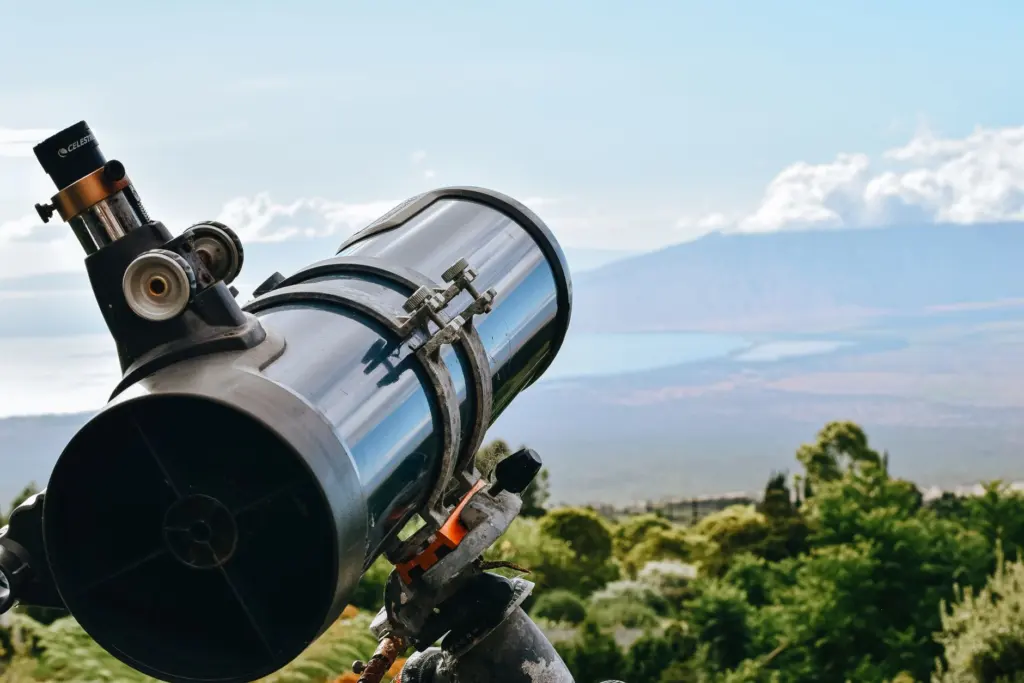
A reflecting telescope uses a mirror as its primary optical element, and the mirror reflects light to a focus. NASA points out that large mirrors can be made thinner and lighter than lenses of the same size, which makes reflectors ideal for large instruments. For a buyer, that is the reason aperture-focused designs tend to be mirror-based.
How the optics form and enlarge an image
Gathering light comes first. The main lens or mirror collects light from a distant object and brings it to a focus. Aperture is the diameter of that collecting element, which is why a larger aperture shows fainter objects.
Magnification is the second stage, and it happens at the eyepiece. OPT gives the rule: magnification equals the telescope’s focal length divided by the eyepiece’s focal length. Eyepiece focal length is marked in millimetres, so the numbers on the eyepiece barrel are all you need to work out the power for a given telescope. Because the telescope’s focal length is fixed, the eyepiece is the only part you change to choose a power. This also explains why a high-power eyepiece in a small telescope disappoints: the formula raises the power, but nothing in it adds light.
Light also passes through Earth’s air before it reaches any telescope, and readers curious about that journey can read How Fast Is Light In Air? The Practical Guide To Light Speed In Earth’s Atmosphere (2026) – Decolonizemars.
Seeing Mars through a telescope
Yes, you can see Mars with a telescope. EBSCO lists Mars alongside Jupiter among the planets that telescopes let people study. OPT’s guidance suggests that moderate power is enough to begin: almost everything in the sky can be seen at 75-100 power in most scopes under decent skies. Start with an eyepiece that lands in that range for your telescope, using the focal-length formula above, and move to higher power only if the view stays bright and clear.
Large and space telescopes
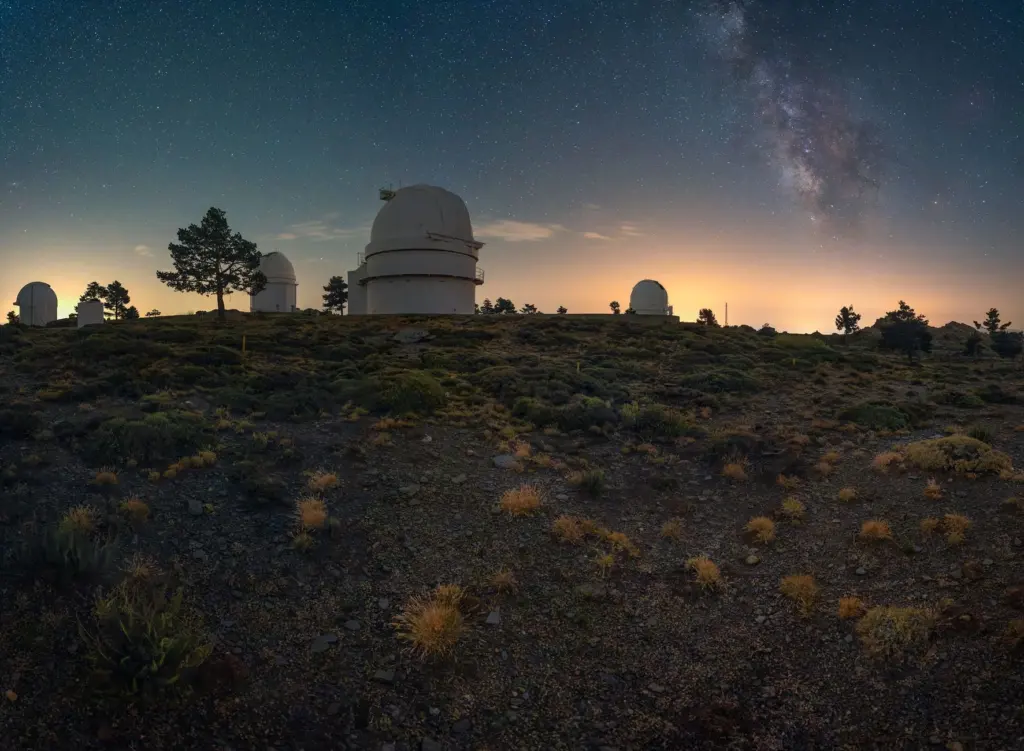
Professional instruments follow the same logic as backyard ones, scaled up. Observatory domes house telescopes whose main mirrors are far larger than anything sold for home use, and the mirror-based design is what makes that scale practical.
Space adds a weight problem, and NASA’s point about heavy lenses applies directly. The James Webb Space Telescope uses a mirror made of individual panels that combine into one enormous mirror designed to collect infrared light. Panels let a large collecting area exist in a single instrument without relying on one giant piece of glass. Webb also shows that telescopes are not limited to visible light. For a very different cosmic question, What’s The Opposite Of A Black Hole? Exploring White Holes, Time Reversals, And Alternatives (2026 Guide) – Decolonizemars looks at white holes and the alternatives.
Frequently asked questions
What does a Barlow lens do?
A Barlow lens doubles the magnification of the eyepiece it is used with, according to OPT. It gives a second power from the same eyepiece without changing the telescope.
When were the first telescopes made?
NASA says the first telescopes were developed in the 1600s and were refractors. EBSCO records that Hans Lippershey, a German-Dutch lensmaker, tried to patent a basic telescope in 1608, and that Isaac Newton was among the early pioneers of the reflecting telescope in the second half of the seventeenth century.
Why is the Webb telescope’s mirror gold-coated?
NASA explains that the coating optimizes the mirror panels for reflecting infrared light, the primary wavelength Webb observes.
Do refractors and reflectors both work with visible light?
Yes. Refractors and reflectors are the most common types, and each gathers light with lenses or mirrors.