Who owns the Moon? No one. The Outer Space Treaty bars any country from claiming it by sovereignty, use or occupation. Whether companies may own what they extract is the open question, and the Moon Agreement and Artemis Accords pull in opposite directions.
The answer matters beyond the Moon, because the same rules frame who owns mars. For the wider legal field, see Space Law Explained: Who Owns The Heavens And Why It Matters In 2026 – Decolonizemars.
Why no country can own the Moon
The ban on national ownership comes from the Outer Space Treaty. In 1967 the United Nations passed the Treaty on Principles Governing the Activities of States. It says the Moon and other celestial bodies are not subject to national appropriation by claim of sovereignty, by means of use or occupation. Legal commentary at Columbia’s Journal of Transnational Law calls it the most widely adopted space law treaty to date.
The wording closes three routes at once. A country cannot declare sovereignty, cannot acquire the Moon by using it, and cannot acquire it by occupying it. That is why ownership questions shift away from territory and toward a narrower issue: what may be done with material taken from the surface.
Flags, Apollo and why presence is not title
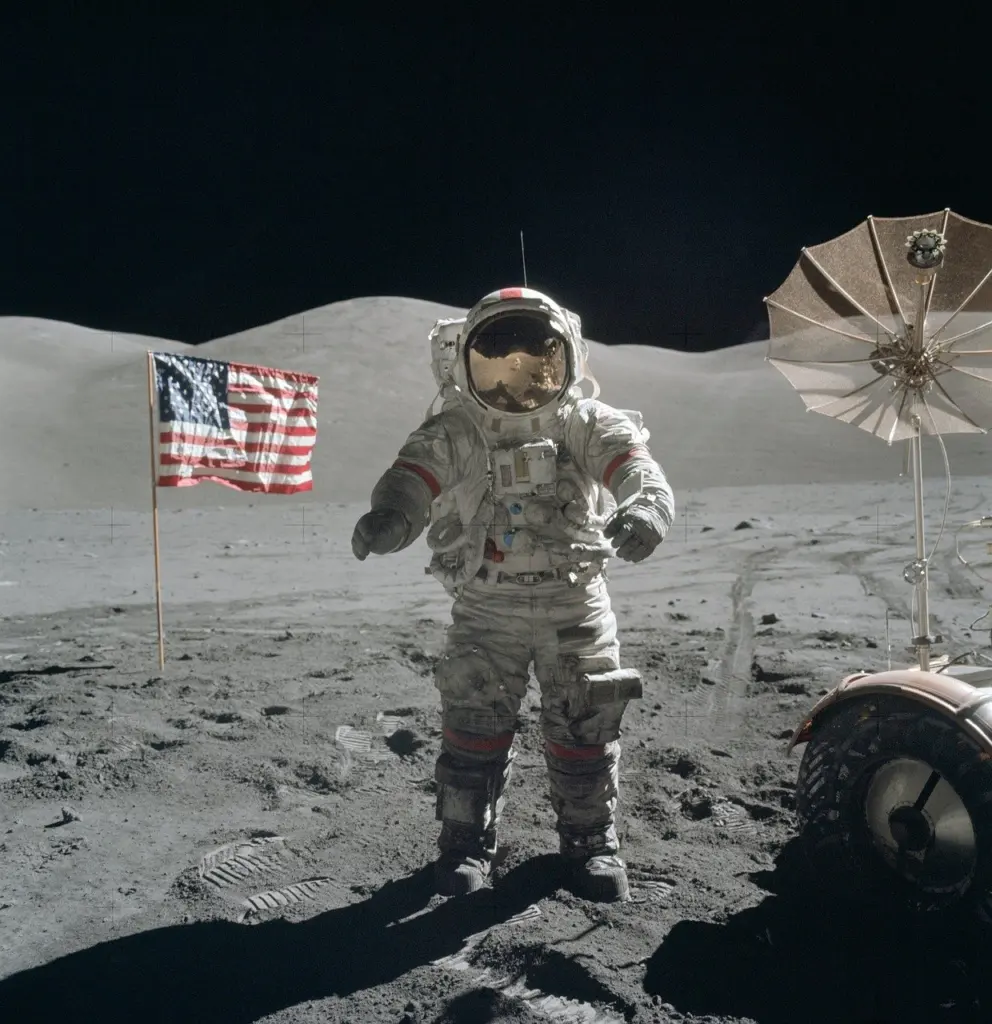
A flag on the lunar surface marks a mission, not a possession. Because the treaty rules out appropriation by use or occupation, planting a flag or leaving equipment cannot turn a landing site into national territory.
The Apollo programme is still the reference point for lunar activity. The Artemis programme is framed as the first crewed Moon mission since Apollo 17 in 1972, according to the same Columbia commentary. Artemis revives the old question of what presence on the Moon legally means. It does not answer it differently.
The Moon Agreement and the Artemis Accords
Two later instruments tried to settle what the Outer Space Treaty left open, namely who may use lunar resources. They answer in opposite ways.
Moon Agreement: the Moon as common heritage
The UN General Assembly adopted the Moon Agreement in 1979, and it entered into force on 11 July 1984. Article 4(1) says the exploration and use of the Moon is the province of all mankind. Article 6(2) lets states collect lunar samples and remove them for scientific purposes. It also allows them to use quantities of lunar material appropriate for supporting their missions.
Article 11 goes further. As Columbia’s legal commentary summarises it, no part of the Moon or its natural resources in place becomes the property of any State or organization. The treaty has also been read as a moratorium on lunar resource extraction until an international regime is established.
Its reach is small. Only a handful of countries ratified it, and none of the United States, the Soviet Union or the People’s Republic of China did. It is the strictest text on lunar resources but binds the fewest powers.
Artemis Accords: extraction without appropriation
The Artemis Accords took the opposite line. They were signed on 13 October 2020 by eight nations. Section 10 affirms that extracting space resources does not inherently constitute national appropriation. The commentary describes them as the first major international agreement on space since 1979, apart from the 1998 ISS Agreement. They recognise private extraction rights in space.
The two instruments do not share a membership. Seven of the eight countries behind the Accords refused to sign the Moon Treaty. Governments in that group have therefore chosen the extraction-friendly reading over the common-heritage one.
The three instruments side by side
| Instrument | What it says about ownership | Practical weight | Planning use |
|---|---|---|---|
| Outer Space Treaty | No national appropriation by sovereignty, use or occupation | Most widely adopted space law treaty | Treat as the baseline: no territorial claim is possible |
| Moon Agreement | Article 11: no part or resource in place becomes property of any State or organization | Ratified by no more than a handful of countries; none of the US, USSR or PRC | Useful as a statement of the common-heritage view, not as a rule that governs major space programmes |
| Artemis Accords | Section 10: extraction is not inherently national appropriation | Signed 13 October 2020 by eight nations | Read as the working framework for commercial extraction among its signatories |
Figures and wording are drawn from the Freethink account of the Outer Space Treaty and Columbia’s analysis of the Artemis Accords.
Commercial mining: what is allowed
Companies can mine the Moon only in a qualified sense: no company or country can own the ground, and the legal position on extracted material depends on which framework applies. The Artemis Accords are the clearest route to commercial extraction. Under Section 10, taking resources is not by itself a national appropriation, so a state can back extraction without claiming territory.
The Moon Agreement points the other way. Its sampling and mission-support provisions are narrow, and the moratorium reading would keep commercial extraction on hold until an international regime exists. In practice, a company’s position depends on the legal setting of the state that authorises it. Projects backed by Accords signatories rest on the extraction-friendly reading.
Public money is already flowing toward lunar surface capability. In 2020 NASA awarded nearly $1 billion in contracts to develop the next lunar lander, according to Columbia’s commentary. Contracts like these create the activity the extraction rules must govern. A single agreement covering all the countries that might extract Moon resources does not yet exist.
One further risk comes with busier lunar and Earth-orbit operations: debris. That separate governance problem is covered in Why Space Junk Is a Growing Threat: What It Means for Satellites, Safety, and Our Future (2026 Guide) – Decolonizemars.
What the lunar case means for Mars
Mars sits under the same sovereignty bar as the Moon. Freethink notes that because the Outer Space Treaty says no country can claim sovereignty, colonizing Mars becomes a murky proposition. A settlement can exist, but the treaty gives it no territorial title.
The Moon shows how that murkiness tends to be handled. The sovereignty ban stays in place, and the live argument moves to resources and the rules for extracting them. Two models are on offer. One is a common-heritage rule in the style of the Moon Agreement, with the resource question left to a future international regime. The other is the Accords approach, which allows extraction without territorial claims. Anyone judging a Mars settlement plan should ask which of the two it assumes, and which states stand behind it.
Frequently asked questions
Can individuals buy lunar land?
No recognised route exists. The Outer Space Treaty bars national appropriation of the Moon, so a seller cannot rest a deed on any state’s sovereignty. Article 11 of the Moon Agreement also says no part of the Moon becomes property of any State or organization.
What does the Moon Agreement say about peaceful use?
Article 3(1) says the Moon shall be used by all States Parties exclusively for peaceful purposes. That obligation binds only the countries that joined the agreement.
How many countries signed the Artemis Accords at the start?
Eight nations signed on 13 October 2020. Seven of those eight countries refused to sign the Moon Treaty.