| Situation | What is established | Planning use |
|---|---|---|
| Quoting the headline constant | The vacuum speed is fixed by definition at 299,792,458 m/s | Treat it as the reference value and as the starting point for any air calculation, not as the speed in air. |
| Rough explanations in US units | Light travels at a constant, finite speed of 186,000 mi/sec | Good for general explanations. Switch to the metric figure whenever a calculation must be traceable. |
| Light passing through air | Light is slowed in transparent media such as air, water and glass | Expect a speed below the vacuum figure and do not substitute one for the other in precise work. |
| Converting vacuum speed to a medium | Refractive index is the ratio of vacuum speed to speed in the medium, usually greater than one | Divide the vacuum speed by the refractive index of the air in question. |
| Measuring distance with light | Laser pulses timed with atomic clocks over known distances | Decide which medium the pulse crosses before turning travel time into distance. |
Figures are drawn from NASA Glenn Research Center and from John Baez’s physics FAQ at UC Riverside.
The speed of light in air is lower than the vacuum value of 299,792,458 m/s, because air is a transparent medium that slows light. The exact figure equals the vacuum speed divided by air’s refractive index.
For the wider science behind questions such as is mars habitable, the Mars habitability hub collects related explainers on atmospheres, light and measurement.
What the number means for everyday decisions
Most people meet the speed of light as a single headline constant, so the practical question is which version of that constant belongs in a given task. The constant that is guaranteed is the vacuum one. As the UC Riverside physics FAQ puts it, the speed of light is only guaranteed to have a value of 299,792,458 m/s in a vacuum. Anything that travels through air needs one extra step.
That step is small to describe and easy to forget. Air is a transparent medium, and light is slowed down in transparent media such as air, water and glass. The vacuum figure is therefore the reference, and the speed in air is that reference reduced by the refractive index of the air.
Quick decisions by task
- Classroom or general explanation: use NASA’s statement that light travels at a constant, finite speed of 186,000 mi/sec. It is a clear round figure for US-unit audiences, and the exact value of 299,792,458 m/s is the better choice if anyone will check your arithmetic.
- Metric calculation: start from 299,792,458 m/s. This value has been exact, not approximate, since 1983, according to the explainer at physicsfundamentals.org, so there is no rounding error to carry into later steps.
- Anything through air: divide the vacuum value by the refractive index of the air. The result is a speed below the vacuum figure, which keeps you from treating the vacuum constant as a measured property of the atmosphere.
- Anything defined by the metre: remember that the length standard refers to vacuum, not to air. That distinction matters when you reason about what a stated distance actually represents.
The choice depends on how much error the task tolerates. A talk about astronomy can use the round US figure. A timing or ranging calculation that will be compared against another instrument needs the exact vacuum constant and an explicit refractive index.
Measuring distance with light in air
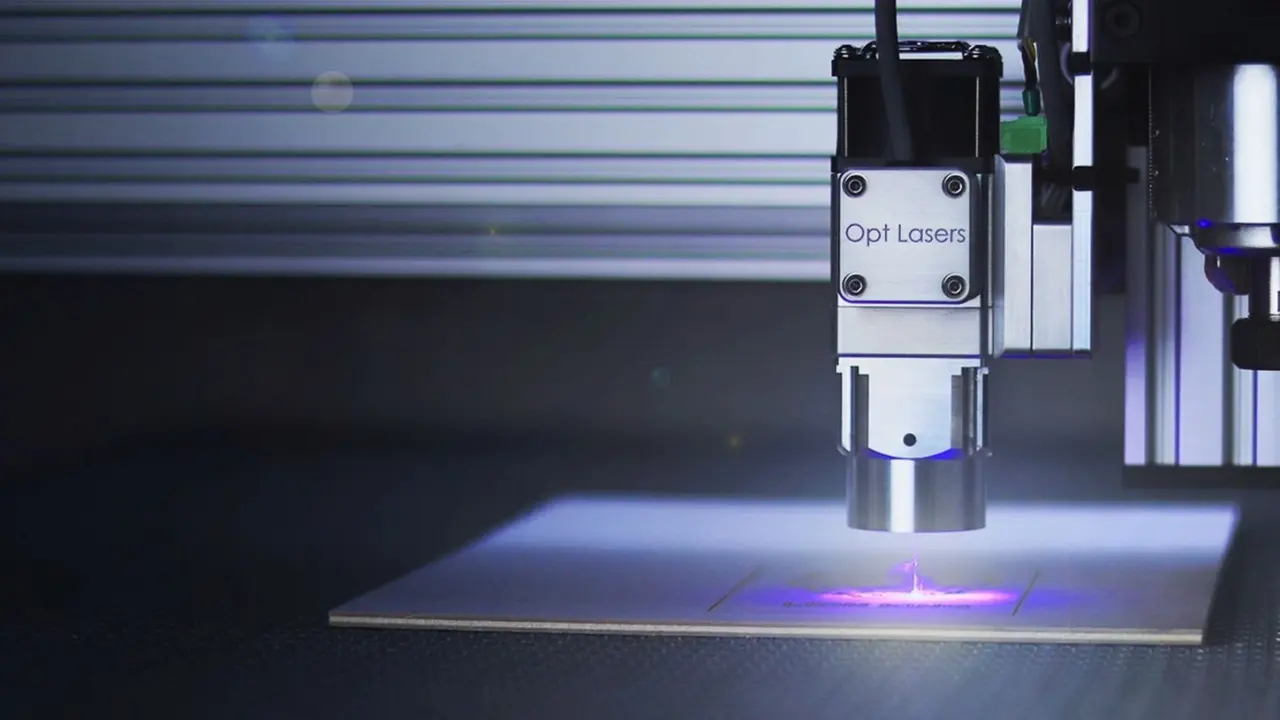
Laser ranging is the clearest place where the speed in air has consequences. The UC Riverside FAQ notes that, at the moment, macroscopic distances are measured most accurately by sending out laser light pulses and timing them with atomic clocks over known distances. Distance then follows from travel time multiplied by speed.
That multiplication is the pitfall. If the pulse crosses air but the calculation uses the vacuum constant, the speed is overstated, because light is slowed in air. The mistake does not announce itself. It simply shifts every distance in the same direction, so a ranging result can look tidy and still be biased.
Choices when you need distance from timing
- Work in vacuum terms when the path is vacuum: the exact constant applies directly and no refractive index is needed.
- Include the refractive index when the path is air: apply the ratio rule so that the speed used matches the medium the pulse actually crossed.
- Keep units consistent: the metric constant and the US-unit figure describe the same physical speed, so choose one system for the whole calculation and stay with it.
Telescopes, stars and the atmosphere
Light from astronomical sources spends nearly all of its journey in space, where the vacuum value governs, and then passes through Earth’s air before reaching any instrument. The same slowing that matters for lasers therefore sits at the end of every observation made from the ground. For the source side of that story, see How Hot Is the Sun? The Temperatures of Its Surface, Core, and Corona Explained (2026) – Decolonizemars.
On the instrument side, the refractive index idea underpins how lenses bend light, since the ratio by which light is slowed in a material governs how that material redirects it. The explainer How Telescopes Work: A Clear, Practical Guide To Optics, Types, And Choosing One In 2026 – Decolonizemars develops that optical side in practical terms.
Why air slows light: the mechanism
The slowing in air is a property of the medium, not of the light source. In vacuum nothing interacts with the wave, and the speed is the fixed constant. In a transparent medium the wave travels more slowly, and the amount of slowing is captured in a single number.
Refractive index as a ratio
The UC Riverside FAQ states that the ratio by which light is slowed is called the refractive index of the medium. In symbols, the refractive index n equals the vacuum speed c divided by the speed v in the medium. Because light is slowed, that ratio is usually greater than one.
This definition does two jobs. It tells you what the refractive index of air is: the vacuum speed of light divided by the speed of light in air, a dimensionless ratio above one. It also hands you the conversion in the other direction, which is the whole calculation below.
Refractive index of air in practice
Air is one of the transparent media named in the evidence, alongside water and glass, so its refractive index follows the same rule as theirs. The index belongs to the medium, which means that a value for air should be taken for the air and light actually in use rather than copied from a different setting. For a precise application, take the index from a reference suited to your conditions rather than from memory.
A worked calculation, step by step
- Write the vacuum speed: c is 299,792,458 m/s, the exact defined value.
- Obtain the refractive index of the air: this is the ratio n described above, usually greater than one.
- Divide: the speed in air is v equals c divided by n.
- Sanity check the result: because n is greater than one, v must come out below 299,792,458 m/s. A result above that figure means the division was inverted.
The same relation run backwards recovers the index from a measured speed: n equals c divided by v. Once you hold any two of the three quantities, the third follows without further assumptions.
How the vacuum speed became the anchor
The metre itself is tied to the vacuum constant. The definition quoted in the UC Riverside FAQ says the metre is the length of the path travelled by light in vacuum during a time interval of 1/299,792,458 s. Fixing the length unit this way is what makes the numerical value of the speed exact rather than measured.
This has a useful consequence for anyone comparing numbers. The exact figure is a definition, so it will not be revised by a better experiment. What can differ between calculations is the refractive index of the medium, which is why disagreements in precise light-in-air work usually trace back to the index rather than to the constant.
Common pitfalls
- Treating the vacuum figure as the speed in air: the guaranteed value applies in a vacuum only, so a calculation through air needs the medium’s index.
- Confusing the rounded US value with the exact one: 186,000 mi/sec is a convenient statement of the constant, whereas 299,792,458 m/s is exact. Do not mix them in one chain of arithmetic.
- Inverting the ratio: multiplying by the index instead of dividing yields a speed faster than vacuum. The sanity check in the worked steps catches this immediately.
- Importing an index from another medium: water and glass slow light too, but the index belongs to the specific medium, so use the one for air.
Frequently asked questions
Is the speed of light always the same?
NASA describes light as travelling at a constant, finite speed, and the exact constant is the vacuum value. In a transparent medium such as air, water or glass the light is slowed.
Is 299,792,458 m/s exact or rounded?
It is exact. The value has been fixed by definition since 1983, and the metre is defined from it, so it carries no measurement uncertainty.
Why is the refractive index of air above one?
Refractive index is the vacuum speed divided by the speed in the medium. Air slows light, so the speed in the denominator is smaller than the vacuum speed and the ratio comes out greater than one.
Can I use the vacuum constant for a quick estimate through air?
For a rough explanation, yes, and the round US-unit figure works even for casual use. For ranging, timing or any comparison against another instrument, apply the refractive index so that the speed matches the medium.